Authortayaid11

Continuum and Realistic Writing

Both of our main texts this week: the film “Beautiful Country” and the book by Aimee Phan, “We should Never Meet” had an interesting similarity in that they favor story lines and plots that don’t “resolve.”

That may be a bit strong. Perhaps they don’t resolve in the “Western way” that we’re used to. In class, Kris touched a bit on the idea that in Western culture we tend to be very interested in how things end: the guy gets the girl, the bad guy is beaten, the happy ending closes with a symbolic sunset, etc. but is that entirely realistic? If we look at the idea of a continuum, where a given story or plot is just a singular point in the life of a character who exists before the plot and will  continue to exist after the plot, then it seems impossible for things to ever tie together that smoothly.

For example some of the most popular movies in Western culture right now are superhero movies. Occasionally characters will leave a snippet of conflict unresolved (at least until the next movie) or a character might allude back to the past in order to provide exposition, but generally speaking these films are short, flashy, funny, and always end with at least one bad guy being utterly defeated. I LOVE superhero movies but after some of the reading we’ve been doing this quarter I am starting to wonder if I can also fall in love with the more realistic style of storytelling that I’ve been experiencing.

Life’s events are rarely tied up with a neat little bow and to leave things hanging or in limbo, while sometimes less satisfying, paints a more complex picture of the story and characters. A lot of the stories this quarter have been really sad and have ended in uncertainty leaving the reader to wonder about the future, but I believe they have left their mark and made a greater impact on me for it.

Fatherhood and Maslow’s Hierarchy

“Absent Fathers, Lost Sons: The Search for Masculine Identity” is a book I’m using as a source to bolster my final essay. A big part of my paper is about how fathers help to give us our identity and set the tone for our lives by guiding us in our early experiences. The author Guy Corneau asserts that the last few generations may have had a hard time connecting with their fathers because the fathers were so busy surviving for most of their lives that they never developed much emotional intelligence or the ability to be emotionally vulnerable. The newer generations growing up with more safety and security now rise in Abraham Maslow’s famed “Hierarchy of Needs” to needing love, belonging, self-esteem; things the last generation was arguably not paying as much attention to.

Many people that I know have a hard time connecting with their fathers, usually for similar reasons. As of right now I’m not sure how quantifiable this theory is, but I’m hoping that this book can provide me with some answers. The book presents an interesting theory and I haven’t done enough digging in the book to quite get at Corneau’s full thesis, but I found it to be startlingly close to the points I’m trying to touch in my own writing so I think diving deeper will be worth my time.

Father Figures in Anime 2 (Toradora)

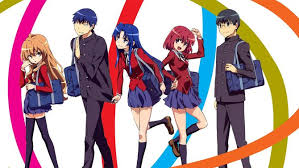
Toradora is another anime that deals with heavy themes regarding father figures. Both the main characters, Taiga and Ryugi, have estranged father figures and in the show they discuss how this has negatively impacted their lives. Ryuji, like so many, never knew his father and resents his absence because it leaves Ryuji to take care of his mother and house while studying full time. The only thing Ryuji’s father left him was his looks, which Ryuji blames as the reason for his social awkwardness.

Taiga on the other hand grew up with her father but her father divorced her mother and remarried, replacing Taiga with his new family, ever since then Taiga and him have had a rocky relationship at best. Taiga and Ryuji compare their differences over the course of the show and both reflect on how their interaction (or lack thereof) with their fathers has caused them to have difficulty connecting with people and making friends in the real world.

Both Taiga and Ryuji’s situations are all too common these days and I think that’s why this show has had such a big impact among the anime enthusiasts of America. Toradora never had an English dub, so you can only watch it in Japanese with subtitles but that doesn’t stop it from being one of the most celebrated romantic-comedy anime out there, and I believe its popularity is due to its real-life themes (especially relating to fathers) that hit so close to home for the viewer.

“Morning of America” – a bittersweet reflection

We watched a live video for the track ” Morning of America” by Blue Scholars in class on Tuesday.

First of all the keyboard track alone was enough to make me listen to it another ten times.

I’m unaware of what Blue Scholar’s mission or creed is; maybe social justice and awareness, maybe just dope music with meaningful lyrics. Whatever the case may be this song gives the listener a little glimpse into the writer’s experience; their life, their struggles, their unique and crucially important perspective.

In the first verse Geo makes references to the age he was born in; Prince was topping the charts, Ronald Reagan was president, the Berlin Wall was still up, etc.  He mentions that his parents were immigrants and that his family was “far from the Huxtables” Bill Cosby’s African-American family on “The Cosby Show.” He effortlessly paints a picture of the times with both political and pop culture references, talking about the cold war and Marvin Gaye’s album “What’s going on?”

The song closes with a particularly proverbial set of lyrics: “Things happen for a reason to say but I say there’s a reason things happen, and it wasn’t all good way back in the day struggled then struggled now still standing.” I take this to mean that Geo views the world with a critical eye, believing in sociological cause and effect; his family didn’t struggle for some mysterious reason, because of the actions of others and the way society is his family struggled. The song doesn’t sound angry or pessimistic despite its social commentary, if anything it sounds hopeful, they are “still standing” after all.

I mentioned before that I believe that Geo and Sabzi’s perspective is crucially important. Born from two immigrant families in Seattle theirs is a voice that we don’t get to hear often enough. In order for us to learn from each other we must first hear each other out, Geo and Sabzi spread their perspective in a positive and peaceful way and I believe that their music will cause others to open their ears.

Dark Blue Suit: Fathers Modeling Sex Addiction

Dark Blue Suit is not “about” sex. It is much more a memoir of sorts, telling detailed stories from the life of “Buddy” a 2nd generation Filipino-American growing up in the heart of urban Seattle. Buddy lives in a community made up of mostly poor racial minorities, who have a hard time finding jobs often because of their skin color. Opportunity among his friends and relatives for upward mobility is scarce and families are often broken and scattered across the west coast. Buddy himself grows up knowing, even at the age of five, that he has other siblings that he may not be aware of due to his father’s almost openly promiscuous behavior. This seems to be the case for almost all of Buddy’s older male role models; most haven’t formerly “settled down” with a mate but even those that have carry on affairs on a regular basis, and are aware that they have far more biological children than the ones that actually live under their roofs.

Many of Buddy’s contemporaries in the book are told that they have no future other than the military or manual labor by teachers and counselors in the high schools they attend. Often times this bleak counsel is internalized and so the youth of Buddy’s community seek means of escape which often come in the form of fighting, drinking, drugs, and sex. Throughout the book women are discussed in regards to how many of them a man has been capable of sleeping with and how capable they are of using their sex as a means of survival. One of Buddy’s half sisters, Sonia, for example survives on the streets as a hooker and a stripper having been run out of the house by Buddy’s parents decades prior.

The young men obviously look up to their older role models, Buddy’s dad in particular is noted as having a lot of influence among the members of the community, and so in turn the young men begin to follow the pattern set before them by the previous generation. The men hunt women, sleep with as many as possible, and inevitably end up having many children and a string of broken relationships that one could argue damage their sexuality and ability to maintain healthy relationships. In Buddy’s own life we see his inability to hold a steady long-term relationship, he’s had at least two divorces by the end of the book with hints that he’s had several other relationships that ended poorly as well.

It’s unclear what Buddy’s romantic goals are, it almost seems as if he’s just going with the flow, but I’d hazard a guess that because his father modeled a pattern of womanizing to him Buddy has normalized his dad’s promiscuous behavior and it has now crippled him. I wonder if Buddy’s dad had been faithful to his mother how much of the pain in these short stories could have been avoided, I think that it goes to show how big of a role our parents play in our lives and the price of poor leadership.

Father Figures in Anime (Naruto)

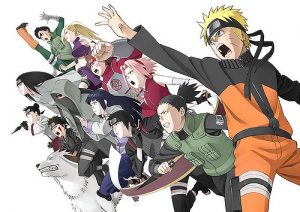
The manga “Naruto” is the third best-selling manga of all time.  In my opinion this show has stronger, more clear, messages than most of the anime I’ve seen, with themes that revolve around government corruption, the greater cost of war, forgiveness, and family ties including fatherhood. Naruto grows up without knowing his parents and this greatly cripples his ability to interact with his peers and authority figures. As the show progresses the viewer begins to see the legacy of Naruto’s father and all the things that his father set up in advance to give Naruto success in his adulthood.

I believe that this show reached it’s level of popularity because of its deep messages and especially because of how close to home Naruto’s struggle hits for so many. I’d like to do more research on this show and figure out how to incorporate the dynamic between Naruto and his father, Minato, into the final draft of my essay.

Miscellaneous Terms and Notes from 10-13-17 Seminar

  • Why/How in literary analysis:

Why = what is the author trying to make me understand, what is the message or underlying theme.

How = Relates to craft, how does the author illustrates underlying themes for the reader, what literary techniques do they employ, what is their writing style.

  • Code Switching: Changing your home or ethnic vernacular, becoming like the culture you’ve moved into. For some folks, code-switching is simply adopting certain elements of a culture that they’ve been newly exposed to. For others code-switching is negative because they must divorce themselves from their culture just to survive in a new one.
  • Displaced Identity: When you are displaced you have to create a new cultural identity in order to get by; maybe you change they way you talk, the clothes you wear, or what you claim to believe. It can then be very hard to go backwards to your old culture because your hybrid identity now no longer fits the description of either. Jeehyun and Haejin in “Forgotten Country” are good examples of this having cultural roots in both Korea and America but feeling a bit out of place and awkward in both cultures.
  • Side note: When discussing racism it is of the utmost importance to define the word “racism”  within the discussion. Many people have different opinions and perceptions and may have heard different definitions of what racism is so one can’t have a proper debate without first speaking the same language.


Fatherhood and Family Dynamics in “Forgotten Country”

Image result for photos Korea

Forgotten Country paints an incredibly realistic picture of a family dealing with trauma. The most fascinating part of this book to me was the dynamic between the protagonist, Jeehyun, and her father. Jeehyun and her father share an interesting relationship; Jeehyun feels a filial obligation to please her father and earn his love while the father loves her unconditionally but because of his personality and cultural background, sometimes doesn’t show his affection.

So much of the family conflict in this book, which made up the brunt of the plot, I thought could have been avoided if the family simply communicated better. The aunt feels resentment toward the father for not living up to her expectations and towards the mother for not pushing the father to achieve more,  the sisters resent each other because of their own perceptions of what the other has that the other doesn’t, Jeehyun assumes that she isn’t loved by her parents because of their insistence on her being responsible for her sister and their seeming lack of sympathy and so on.

The author also draws our attention to some of the cultural reasons for way the members of the family, especially the elders, act this way towards each other. When the family returns to their homeland of Korea the sisters meet other relatives who act in similar ways: not discussing hard emotional issues even if they are painfully obvious or acting out displays of false or exaggerated concern or passion because that’s what they were taught was expected of someone of their place in a family. After the father dies for example the aunt wails and cries and “makes a scene”, the author makes a note to the reader that the aunt feels that that is what she is expected to do as the sister of the deceased person and a woman. It’s this sort of disingenuous behavior that almost every member of the family exhibits at some point in the book that seems to lead to their lack of vulnerability and, therefore, their inability to express their true feelings to each other.

At the end of the story, Jeehyun realizes that her father’s goal was really just to have the family together and to be happy as a unit, living in their homeland, in the last months of his life. Her father also displays affection for her that she didn’t think existed up until that point. When her father loses the ability to speak, there is a scene where he kisses her face tenderly, Jeehyun notes that she doesn’t think that he’s kissed her since she was seven years old.

It is a heartbreaking thing to think that Jeehyun only realized her father’s true love for her in the last year of his life, having always doubted before because of his detached and formal tendencies. Fathers that struggle with being emotionally intimate is something that I believe many people today face, this story just goes to show that a little can go a long way for a soul starving for affection and affirmation. That being said remember to tell someone that you love them today!

Samurai, Breakdancing, and rap.

For my final project I touch on how music from popular anime shows influenced the music that I play and listen to. To me there is no better example of a cultural crosscurrent in anime music than “Battlecry” written by Japanese artist “Nujabes” for the 2004 anime “Samurai Champloo” (from director of “Cowboy Bebop” Shinichiro Watanabe). This Japanese language show, set in a fictional feudal japan, nakedly and without apology combines American hiphop music, break-dancing, and samurai to make one of the coolest and most unique shows I’ve ever seen.

I used to listen to anime “openings”(basically theme songs that play at the beginning of anime episodes) on repeat when I was younger, and Battlercry was one of my favorites. The track has a classic hip-hop backtrack and features Japanese-American artist Shing02 rapping in English. This song was one of the first things I thought of when I chose my topic for the paper; a perfect blend of cultures to create something altogether “other” and more special for it!


A Few Observations from “Better Luck Tomorrow”

  • All the events that took place in this movie can maybe be traced back  to the stress that these young Asian Americans are under. Each of them seems keenly aware that  as minorities they must be outstanding in all fields just to fit in among regular Americans; they must become model minorities just to achieve normalcy. Steve Choe alludes to the fact that he has reached the pinnacle of that model minority status and is now being driven mad by having nothing left to reach for in life. These and other elements combine to cause these kids who seemingly have no reason to act out, to become criminals.
  • The lack of opportunity despite achievement, (Ben Manibag is a high-achieving student who still works a dead-end fast food job) has maybe caused the teens to have internalized hopelessness so that they have to rebel in order to feel anything. Having to put in super human effort on their grades has most likely kept them from developing deeper relationships with other kids their age until they get into the petty crime; having something to belong to that’s bigger than themselves is probably the best thing they’ve felt up until that point.
  • This is a high school movie just like “The Breakfast Club” except for it spotlights a normally invisible but present clique: American kids with Asian heritage who have to deal with their sometimes conflicting cultures and who completely  identify as American despite not always being seen or accepted as such.  “The Breakfast Club” was famous for showcasing and accepting all the typical high school archetypes, how different would that film be if it had also highlighted the racial minorities as well as the social ones?

© 2025 Aiden's A-Pop Blog

Theme by Anders NorénUp ↑