CategoryScissors

A personal journal – these posts will include any snippets (pun intended), fragments, partially formed thoughts, personal observations, etc., related to our program and which you may or may not reassemble into logical/linear fashion form by quarter’s end.

“Birth of the Dragon” Review

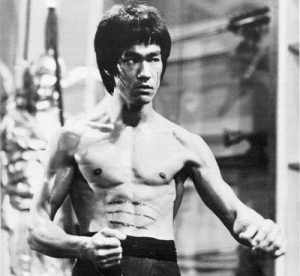
Birth of the Dragon  must have been painful to watch for die-hard Bruce Lee fans, and many people gave it terrible reviews on the basis that it was nothing like the films that made Bruce Lee a legend. I wasn’t raised on Bruce Lee films and have never really taken the time to study him so I had no expectations going into  watching the film. To the annoyance of many, Birth of the Dragon  portrayed Lee as flashy and confident almost to the point of rudeness; from what I’ve heard however, this might actually be pretty close to the truth, especially when Lee was younger.

The weirdest part about Birth of the Dragon was that Bruce Lee and his rival, Wong Jack Man, took back seats in the plot to Steve McKee, a white student of Lee who falls in love with a woman from a Chinatown restaurant run by a Chinese-American crime syndicate. The plot, which one assumes would revolve around martial arts and the feud between Wong Jack Man and Bruce Lee, takes a sort of left turn when it begins to focus on Mckee and his love interest. I’m not necessarily saying that this way of doing the movie was a bad choice by the director, I just think it might have been a bit uncalled for. On one hand  the film through Mckee’s perspective gives Lee and Man an opening to explain the mentalities and styles of their two branches of Kung Fu to an audience who might not have otherwise understood what was going on but it also serves to distract us from the development of the two martial artists and make them seem like one-dimensional background characters in a martial arts-themed love story.

In general the movie was just a little too out of touch to make an impact, the acting wasn’t bad, the fights were good, and even the plot had some redeeming points, but none of it was what I would consider great. The fact that the role of main character was split between Lee, Man, and a random white dude was my least favorite part. I think that the white protagonist with no real reason to be there served to unintentionally erase Lee and Man’s human aspects causing them to be fixtures in another character’s story about themselves.

Notes on the “Mahu”

We watched the short film “Kumu Hina” in class on Tuesday which gives us a glimpse into the life of Hina Wong-Kalu, a trans-gender Hawaiian hula instructor. Chico described it as a movie that deals with “fluidity and hybridity” so I tried to keep those themes in mind as we watched.

Traditionally someone who is Mahu accepts both the feminine and masculine sides of gender equally and considers themselves someone who is “in the middle.” Mahu were healers, caretakers, and teachers of ancient tradition, history and culture. With most of the Pacific Island cultures having only oral histories and nothing written down, those who passed on culture and legends like the Mahu were very important.

Hina Wong-Kalu started as Collin Wong (male) and then later in life made the transition to being fully in the middle. Hina is married to a Tongan man, they both face a lot of stigma from their own cultures because of this.  Wong-Kalu gets an estrogen shot once a month to make up for lacking a biological menstrual cycle.

*Side Notes*

  •  Ku = male energy
  • Hema = husband
  • Aloha – love, honor, and respect.
  • Wong-Kalu considers herself both male and female, not just female.
  • Wong-Kalu sees her role as molding young kids into the best that they can be.

Arguments and Division

In the wake of my Draft #2 I’ve been continuing to “surf” EBSCO and other search engines designed to help students research. I realize that my topic being about both father figures and Asian-Americans is a tall order for any research database, but I must admit that I’m surprised at just how hard it is to find applicable research on this topic.  Perhaps it is telling of how unnoticed APIA peoples feel in our Western society.

∗∗∗

More arguments continue to erupt on my Facebook feed, over politics, sexuality, race, religion, etc. In the past I have always written these unofficial debates off as nonsense and moved on without so much as a second thought, but with the increasing frequency of these arguments, the state of our country’s political climate and the perspective of this class under my belt, it’s becoming hard to not take notice. The outstanding themes that I see in all of these debates, no matter the subject, are that they are always about social issues and neither side seems to make any headway with the other because neither side is after the truth, but rather the victory which will never come (because it’s a Facebook argument).

I don’t think that I necessarily have any better perspective on the subject, which is why I never argue on the internet and intend to keep it that way, but I do know that I have never seen progress come of these debates. In taking this class and others in the past like it, I think that my biggest take-away has been that all people are pretty similar: we all want love and affection, security, peace, etc. we just all express those things in different ways and that often causes trouble.

Part of the problem of a social media debate is that it is very public and therefore it is impossible for egos to not play an overwhelmingly huge role in the disagreement. I often wonder how different these arguments would turn out if a discrepancy arose and one party invited the other out to coffee in order to find common ground privately and in good faith. I realize that this is wishful thinking and wildly out of character for our culture that gorges itself upon dramatic entertainment but perhaps one day it will catch on.

Social problems will always affect our lives because we are social creatures, I just genuinely pray that I can be a person who helps to bring progress and healing rather than division.


Draft #1 Feedback

My peers noted that I didn’t really have any Asian American pop culture connections in my first essay (honestly I hadn’t really figured out my angle yet so I bypassed them) this is something that I’m trying to really focus on while writing my second draft.

My first draft felt a lot like fluff because that’s pretty much what it was. Writing meat into this essay has been hard because I run the risk of getting a little too personal but also of being too vague and just writing words for the sake of words (even I got pretty bored with the last draft).

Kris mentioned that I should try to make my father more complex. Because I love my dad so much I might have just gushed about him in my original draft while not even thinking about his flaws resulting in a rather one-dimensional portrait of my father to those who don’t know him. As I think back I have a hard time recalling his flaws probably because at this point they seem very normal to me, but maybe great writing is taking a step back and introducing the reader to a character I know intimately like I’m looking at him with a brand new set of eyes.

This essay has been tricky for me, I didn’t really get the prompt at first and had to have it explained to me several times; slowly. I think that I’m used to arguing in my essays and to not have anything to argue about is more confusing to me than I thought it would be. In general I’ve finally realized that I don’t have to argue a point necessarily for this essay but rather, make lots of observations and then simply point them back to my idea of what home is. Simple right?

Father Figures in Anime 2 (Toradora)

Toradora is another anime that deals with heavy themes regarding father figures. Both the main characters, Taiga and Ryugi, have estranged father figures and in the show they discuss how this has negatively impacted their lives. Ryuji, like so many, never knew his father and resents his absence because it leaves Ryuji to take care of his mother and house while studying full time. The only thing Ryuji’s father left him was his looks, which Ryuji blames as the reason for his social awkwardness.

Taiga on the other hand grew up with her father but her father divorced her mother and remarried, replacing Taiga with his new family, ever since then Taiga and him have had a rocky relationship at best. Taiga and Ryuji compare their differences over the course of the show and both reflect on how their interaction (or lack thereof) with their fathers has caused them to have difficulty connecting with people and making friends in the real world.

Both Taiga and Ryuji’s situations are all too common these days and I think that’s why this show has had such a big impact among the anime enthusiasts of America. Toradora never had an English dub, so you can only watch it in Japanese with subtitles but that doesn’t stop it from being one of the most celebrated romantic-comedy anime out there, and I believe its popularity is due to its real-life themes (especially relating to fathers) that hit so close to home for the viewer.

Father Figures in Anime (Naruto)

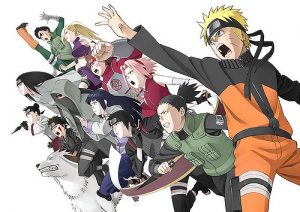
The manga “Naruto” is the third best-selling manga of all time.  In my opinion this show has stronger, more clear, messages than most of the anime I’ve seen, with themes that revolve around government corruption, the greater cost of war, forgiveness, and family ties including fatherhood. Naruto grows up without knowing his parents and this greatly cripples his ability to interact with his peers and authority figures. As the show progresses the viewer begins to see the legacy of Naruto’s father and all the things that his father set up in advance to give Naruto success in his adulthood.

I believe that this show reached it’s level of popularity because of its deep messages and especially because of how close to home Naruto’s struggle hits for so many. I’d like to do more research on this show and figure out how to incorporate the dynamic between Naruto and his father, Minato, into the final draft of my essay.

Food for thought: Week 3

In class and through the books we’ve been reading I’ve discovered that the terms Asian, American, and Asian-American, especially in relation to culture, are near impossible to define and separate from one another. All three of these cultures, in many ways, are one and the same having been so cross-pollinated from one another that to say that something is culturally “Asian-American” can mean a million different things. One American artist’s seminal hit single, that inspires countless other artists, may in large part have been influenced by a piece of music that they picked up from an Asian artist or another American artist of Asian descent.

In turn, music created by an Asian-American individual (my working definition of Asian-American is a person who is born in America but has Asian heritage) cannot exclusively belong to any of the three cultures that I’m discussing as there is no way to measure the extent to which each of the three cultures has inspired the piece; all we know for certain is that it must have been some combination of all three.

The matter only gets more convoluted as each scholar adds their own definitions of culture and race to the mix, (I’ve heard some argue that the concept of race is a fallacy altogether). As I dive deeper into these concepts I hope to unearth a few more answers so I can properly articulate how this class is molding my world view to be that much more aware of the complicated ways in which we humans define ourselves.

The Foreigner: A Father’s Vengeance

Trailer for the new movie coming out called “The Foreigner” starring Jackie Chan. Chan plays a father who’s daughter is killed in a terrorist bombing, he tries to get justice for his daughter but the government won’t help him which causes him to go on a rampage as a vigilante against the terrorist organization.

Another case of a normally calm and reserved father enacting vengeance because of  a threat to his family. It will be interesting to see if the movie has any nods to Chan’s character not getting help from the government because of his race or if it will simply be a regular action movie with no political commentary.

Quest Crew Winning America’s Best Dance Crew Season 8

“Quest Crew” is an American dance group from Las Angeles California. Every member of Quest Crew is Asian-American and they are the only dance team to win the American show, “America’s Best Dance Crew” twice. They have been featured in many popular American music videos and dance shows and have put a new spin on hip hop and break dancing with their comical yet vibrant style.

Example Scissors Post

A personal journal – these posts will include any snippets (pun intended), fragments, partially formed thoughts, personal observations, etc., related to our program and which you may or may not reassemble into logical/linear fashion form by quarter’s end.

© 2025 Aiden's A-Pop Blog

Theme by Anders NorénUp ↑