Graduation (Friends 4 Ever) – Looking Back On A-POP


All good things must come to an end, I’m afraid – happy evenings with friends, critically acclaimed sci-fi series Firefly, and of course, this course. As we look back on ten or so weeks of history, movies, novels, discussions and lectures, what have I learned? What have I still got left to learn? With next quarter being my last as an undergrad, how have my experiences here shaped my direction going forward?

Well, that’s a lot of questions, and I’m only one girl. I will say this – the courses I’ve taken in college that I’ve remembered the most are the ones that taught me things I didn’t realize I needed to learn. Studying the Civil Rights Movement of the 1960s, Learning about the Pedagogy of teaching English Language Learners, and now having the opportunity to be immersed in the colorful and tragic history of Asian Americans.

Sometimes I think it’s easy to only think of what is coming towards us as we move throughout our lives, from job to job, or goal to goal. I’ll admit I was never much of a history person. I DID take AP US History in high school, but all I remember from it is what the Gadsden Purchase was. But what I’ve learned is that as gruesome and unjust as so much of it is, without knowing the history of not just this world, but the different people within it, a fundamental part of learning and living will go unrealized. You begin to connect the dots; to see how things cause and effect, even to see how history does indeed repeat itself from time to time. But it’s something that you owe to your fellow Americans, and your fellow humans to at least acknowledge. Only by seeing where we have been can we hope to understand where we are going.

I’ll also say that as stressful as it was sometimes, I’m grateful for how much this course made me read, because I remembered how much I love reading! Not only that, but the discussions we’ve had and things I’ve learned from the ten novels we studied would have been sorely missed, and wouldn’t have been able to reinforce the heavy amount of material we covered in this class.

I love Pop Culture, and after this class I have an even more thorough concept of it, which I am eternally thankful for. I hope my fellow classmates come out of it feeling the same way.
Birth of The Dragon OR White Man 2 The Rescue: Apocalypse

Ah, the final movie of a quarter filled with memorable and historically relevant flicks. That’s a lot of pressure to live up to, no doubt, and going into Birth of The Dragon I didn’t have a huge amount of expectation. Maybe a laugh or two, hopefully some background on Asian American culture and, if I’m lucky, some quality performances.

Unfortunately for me (and all of us really), only one of those hopes managed to deliver, and even it was lukewarm. Here’s the problem with Birth of the Dragon, a movie centered around the birth of Kung Fu in America and the tale of Bruce Lee, it’s most popular teacher: it’s not about Bruce Lee. It’s not even about Kung Fu. The movie, at the end of the day, is about what most box-office fodder is about; white men saving the day and scoring chicks. Now don’t get me wrong; if that’s what you’re into I have no judgement. But instead of a biopic that helped relay the tale of Lee and Wong Jack Man during an especially racially charged time in our history, we get a self-insert character, Steve McKee, who is given the majority of screentime, character development and relevance. Bruce Lee plays a prominent role, no doubt, but we fail to see any satisfying development within him. If this was the “Birth of the Dragon”, where the heck was the birth??

I’m reminded a bit of the sludgefest that was 2015’s “Stonewall”, an attempt at showcasing what is considered the birth of LGBTQ+ resistance following the Stonewall Riots in NYC. Instead of featuring any prominent real life figures like Marsha P. Johnson or Silvia Rivera, “Stonewall” featured manufactured twink “Danny Winters” (really) as the central character, and subsequently had him play the role of gay liberator in the place of black transwomen. Sure, “BotD” isn’t as erasing as “Stonewall”, but it still shifts focus from POC to whites in a way that clearly is meant to make us care more about them than the people the movie is actually about.

To say nothing of the inaccuracies featured within the movie itself – at one point Cantonese was being spoken, as a classmate pointed out, but subtitles insisted they were “speaking Mandarin”. It’s this kind of oversight that I feel really makes Birth feel so flat. Any real relevence it might have lent to Lee’s story is snuffed out by poor storytelling and a lack of focus on why Lee and Wong are in conflict in the first place. In the end, I’d say I enjoyed this movie for what it was, but sadly what it was did not add up to a whole lot.

Kumu Hina and Harsh Lessons For White People

Let’s start with the film we had the chance to watch last week, Kumu Hina. I was happy to see this film for a few reasons: it was nice to see a narrative rooted in the experiences of a non-cisgender person for once, and Hina has a rich and fascinating story to tell. Not only that, but it was an interesting lesson on the history of gender identity in non-European communities, and exactly how the actions of colonization affect not only our idea of ‘good’ people, but our idea of male and female.

Not only do we see a glimpse into the life of a transwoman living in Hawaii, we get a lot of focus on her relationship to her husband, and how complicated it became when attempting to migrate him from Fiji. While I was thankful for a realistic portrayal of trans people in romantic relationships, I felt that it was a bit too dramatic to really contribute much to the actual narrative or point of the film. Much more effective, in my mind, was Hina’s mentoring of the young girl who identified as being in the ‘middle’.

So rarely do we see LGBTQ+ people represented in our media, and when we do they’re overwhelmingly white or white-passing. This, in my mind, was a fantastic example of storytelling that revolves around tradition, identity and pride in a way that educates as much as it emotes. (Unrelated, but I remembered only after learning that Hina gave a speech at Evergreen that I DID in fact meet her – we both got caught in the same downpour one day!)

As informative as Kumu Hina was, what came after it was beyond anything we’ve experienced in our course thus far. A group of presenters, including members of our own class, schooled us on the experience of Pacific Islanders both now and throughout history. As a group of students, many of whom have no reference point for Oceania, it was enlightening to hear about the often ignored history of islands like Hawai’i, but also those lumped together as “the South Pacific”. Our culture engages in a shocking amount of cultural erasure in respect to Pacific Islanders, and that was made all the more clear by examples of media ‘attempts’ to feature such people (i.e. Moana). Even when given the center stage, the stories of these people are often smushed into one, amorphous blob of history rather than presented as the individual histories they are.

Draft #2 In The Bag. So, what’s next?

As relieved as I am to have gotten some more work done on my piece since last checking in, fashioning draft #2 was quite the feat, and I have to admit I’m feeling some of the fatigue I thought might set in now that the end of the quarter is looming in the background so clearly.

But hey, there’s still two weeks to fill! I’m hoping our trip to Seattle will help fill in some of the gaps in my ideas for giving this paper the finishing touch, and even if not, it should be a hoot and a holler. At this point, I’m really just working on blending together all of these seemingly disparate elements; APIA heritage and history, depression, humor, identity…they’re just related enough that I can see how something perfect will come out of it, but I think it will require a significant final ‘push’ from me.

One thing I think deserves more investigation are the novels we’ve read this quarter. Up to this point, I’ll admit, I’ve been mostly trying to just keep my head above water in regards to the readings, but now I’m seeing just how useful they could be in fleshing out my paper’s main points. Until now, I’ve been looking at where I can find comedy and humor on a surface level, and let’s face it, there really ain’t that much – these are depressing stories. But what is there beyond that – what about how the author is writing certain characters, or how certain situations play out? Having a little time to consider that has me feeling more hopeful about being able to incorporate APIA culture into my work.

The book we’re reading right now actually has a LOT of humor in it, which has me pretty excited! Again though, it’s not ‘pie in the face of a clown’ humor – it’s more subtle than that. But really, isn’t that what a lot of great comedy is, subtle?

Mississippi Masala OR One Serving of 1991 Denzel For Me, Please

There’s nothing wrong with romance for romance’s sake, but it sticks a whole lot better when you sandwich it into a nice blend of drama, historical fiction and humor. Such is the case with Mississippi Masala, the latest film we’ve had the joy of experiencing.

  • Before anything else, let me just say that this quarter has been an experience unlike any other in terms of media – both the novels we’ve read and the films shown were things I can’t imagine ever exploring on my own volition, and from them I’ve learned about both the versatility of film as well as APIA history and culture.
  • In this film we got a lot more historical context than a film like, say, The Debut, which featured a whole lot of culture but not as much history. The tragedy that it opens with was as jarring as it was frightening, and like many tragedies we’ve covered, it was something I hadn’t been familiar with before this course.
  • Returning themes include racism, both overt and covert, the pursuit of purpose in America, and living life as the “Other”.
  • Interracial relationships have become much more common in the decades following this movie, but they still face a lot of harsh criticism from certain demographics. It was nice to experience a story that introduced both characters so thoroughly before developing a romance. It didn’t feel forced, either, which made it all the more tragic when Mina and Demetrius were kept apart.
  • Like many stories, this one doesn’t really end on a definite “happy” note. Sure, the post-credits show what is most likely Demetrius and Mina’s marriage, but I think it was intentional to not depict the sort of ‘girl and boy live happily ever after’ that Westerners are so used to. That, in itself, made it more believable.
  • I’ll definitely seek out more movies and shows like the ones we’ve watched once this program is over – it’s opened a whole new cabinet of possibilities!

We Should Never Meet – But We Did Anyway

Like “Dark Blue Suit”, one of this novel’s greatest strengths is the fact that it’s delivered to us in bite sized pieces. However, I enjoyed the way this piece wasn’t explicitly defined as a connected narrative, but rather allowed the reader to slowly connect the pieces that revealed a deeper, more gripping narrative.

  • In a way, perhaps this mirrors the experiences of people like Kim, Bac Ngyuen, Hoa and Bridget – they all exist in their own contained experiences, but are connected in ways they sometimes are never made conscious of.
  • None of these stories is happy – from beginning to end, there’s not a single experience that ties up with a bow or gives the reader a feeling of satisfaction of completion. As we discussed a bit in seminar, I’m sure this was deliberate as a way to demonstrate that no matter what the circumstances, the effects of the Vietnam war were still felt in the 1990s, and they still are felt today. This was anything but a ‘feel good’ book, and I think that’s one of it’s best traits.
  • Names have power, whether we acknowledge that or don’t.
  • As Americans living several decades past the tragic events of this War, do we still remember exactly how mishandled and traumatic it was for both Vietnam and our own country? Have we learned anything? Would we handle things differently now? These are the questions I was left with after finishing.

The Debut – or, Prince Zuko Gets His Butt Kicked, But Also Gets The Girl

THE DEBUT, from left: Joy Bisco, Dante Basco, 2000. ©Celestial Pictures

There’s something to be said for the campiness in a movie making it more enjoyable. With The Debut, featuring none other than Dante Basco or Avatar: The Last Airbender fame, I think the rather stilted performances and regularly cheesy script actually help it in the end, as it’s essentially little more than a simple story of family love, generational differences and embracing your talents and culture.

  • Similarly to “Better Luck Tomorrow”, The Debut plays out like most romantic teen movies of the age with the exception of featuring an almost entirely Asian cast. The Debut was actually the first Fililpino-American full-length film to come out in theaters, which is pretty darn impressive, and I believe it did a good job of blending Filipino culture and history with a contemporary setting and characters.
  • Despite featuring female characters as little more than romantic leads and side characters, seeing the details of a traditional “Debut” was pretty exciting and interesting. I’d never known what they were like before!
  • Ben’s desire to be a comic book artist seems like a pretty substantial metaphor for his desire to become ‘white’ – a theme we saw in Better Luck Tomorrow and Donald Duk as well. However, I feel that the ending featuring his illustration of him with his father and grandfather helped cement Ben’s resolution to embrace his heritage.
  • Ben’s white friends are definitely problematic, but overall serve as pretty entertaining figures in the story. One significant point is that at every opportunity, they seem interested in learning about Filipino culture rather than being confused or repelled by it. A small detail, to be sure, but one that I appreciated!

Scissors – Where Are We Going, Dear Janie?

So here we are, Week 6. Autumn has lay it’s foot on top of us quite abruptly – hence the sudden blizzard outside – and somehow we’re more than halfway through the quarter!

Having my conference with Kris has helped me feel like my paper is going in the right direction, even though I definitely felt like I was struggling at first. To be honest, I wonder if I chose the right topic. It’s not that I don’t see Comedy as my Home, but I’m just realizing how abstract and difficult to pin down that concept IS. At the same time, it definitely gives me no shortage of things to consider and muse about, but sometimes it’s overwhelming in it’s scope.

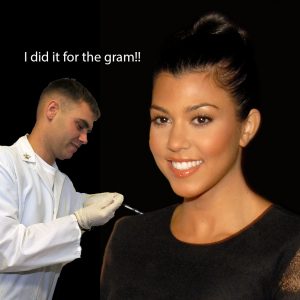
I did stand up again this week, and it went pretty good! I did a bit about the Kardashians making things trendy that subsequently ruin them for the rest of the 99%. They can’t even let the LGBT community off the hook, because now we have to deal with GD Cait!! Pretty soon Courtney is gonna step on a rusty nail and get Tetanus and suddenly everyone is gonna do the “Tetanus Challenge” on Instagram and flood our emergency rooms. :\

My audience was mostly young people, mostly dudes, and while I think they enjoyed it I missed the intimacy and appreciation I felt when performing at the Almost Woke Show last month (A show that featured mostly women and POC.) How much of comedy is other people getting the joke for me? How much is media I prefer to enjoy by myself? How does it’s effect change? Like I said, a lot to consider.


Dark Blue Suit – A Substantial, If Misogynistic, View Into Life As A Pinoy

Alright, so Dark Blue Suit.

The layout of this novel definitely resonated with me : arranging it as a collection of short stories made it easy to stop and pick up later without feeling like your train of thought was disrupted. I’ve always been a fan of short stories, as I feel that they hold a lot of narrative potential. Despite that, I had a hard time getting through this novel simply on the basis that I wasn’t sure what it was trying to say, and what it DID say sometimes rubbed me the wrong way.

What I appreciated about this novel was it’s frankness. At no point does it feel the need to censor itself or try to sugarcoat anything about the rather heartrending stories contained within. All the narratives revolve around the character “Buddy” – who I can only assume is a stand in for the author, and most of them involved themes of loss and individuality. Unfortunately, at no point does the story give any sort of positive attention to female characters, and at the worst, pretty offensive. In particular, the fact that Stephi’s mother was referred to as a ‘puta’ early on in the first story, and how the only significant female character, Stephi, was featured very late in the book and had little to contribute outside pablum drama. There was a little attention paid to her privilege as a mixed-race person, but I feel that so much more could have been done to make us understand and empathize with her.

Rico was by far my favorite character in the story, despite the fact his tale is one of tragedy. His character was probably even more fleshed out than the main characters by the story’s end, having lost himself after serving in the Vietnam War and his subsequent PTSD. It makes me consider; what exactly has changed. We still let kids like Rico slip through the cracks of our public school systems despite having made so much alleged ‘progress’ since the 1980s. The novel even details how Rico was hardly a talentless individual – he simply wasn’t encouraged to explore those talents or given the space to embrace and develop them. His identity as a racial minority made success in life impossible for him. It’s almost too much to take.

Overall I was less impressed with this novel then previous ones, but still thankful to see a set of stories that took place in a local that was very familiar to me (in this case Seattle).

Forgotten Country – It’s A Family Affair

Forgotten Country, by Catherine Chung, was a rollercoaster of emotion, if nothing else. Filled with everything from filial betrayal to traumatic childhood memories and a less than satisfying conclusion, it still stands as a fascinating and more than anything, realistic account of an APIA family in post-war America.

  • Our narrator Janie (Jeehyun) , the older sister of other main character Hannah (Heihyun), is at first depicted as a rational, fairly sympathetic hard-worker who only wants to be there for her family. As our story progresses, we begin to see how she ticks – her motives lie largely in the obligations hoisted onto her from a very young age and are only reinforced by her sister’s disappearance and father’s eventual illness/death. Part of you feels sorry for her – far too much was expected of her, and sister or not, to be shackled with the task of finding her sister in the middle of PhD work seems more than a little unfair. Yet Janie begins to show some cracks as the story goes on and we see just how dysfunctional every member of this family is.
  • At our storys conclusion, Janie and Hannah are planning to go their separate ways, perhaps never to meet again.  After all, Hannah initially left her family behind in an attempt to gain independence. Their father dead and their mother broken, the story doesn’t exactly fill you with hope about the future. But at the same time, it makes an important point : family stuff is messy, and even when things don’t go horribly, it doesn’t mean things end up great.
  • Komo was initially my most despised character; the heavily Christian aunt of Hannah and Janie, she foisted shame and disapproval on not just their Father, but on the family as a whole. It’s interesting how Komo is one of the characters most directly responsible for upholding the misogyny and shame placed on women in Korean society. She claims that by not having a boy, their family has failed.
  • At the same time, Hannah’s refusal to accept the consequences of her selfishness are just as much to blame for rending the family apart. After all, while she eventually rejoins them after the advent of her father’s illness, she never gives a substantial explanation for why. Why had she assumed her family knew about the molestation if it happened outside of their view? It could be a simple case of leveraging her experience into the rest of her resentment towards her family.
  • The constant use of stories within stories helped give the impression of Janie speaking to an invisible confidant; it reads quite a bit like a personal journal, which helps draw the reader in and become invested in the fate of Hannah as well as Janie.