Deathnote

This weekend, I told my dad to watch Deathnote, the Netflix recreation of Tsugumi Ohba and Takeshi Obata’s 2003 Japanese manga series based on a high school student who finds a supernatural notebook that summons a death spirit to kill any name or face he knows. My dad was born in Korea, he was an army brat who moved around a lot at a young age, but ended up living most of his adolescent and adult life here in Olympia. He is quite open-minded when it comes to films and is responsible for many of the Korean culture I embody.

I decided to tell him that it was based on an old anime I used to watch in elementary school and he still seemed intrigued. The next day he told me about the film and what his thoughts were. He really enjoyed the movie but said he could tell by the dialogue, action scenes, and mood that it was based on an anime of some sort. We discussed details of the film like the main characters appearance, the way characters spoke to each other.

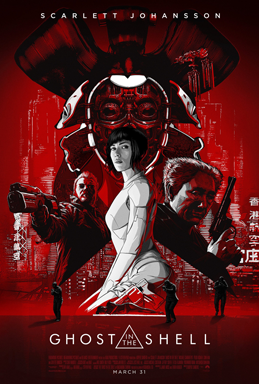
I think this experience can benefit me in the future for this program, like for instance I can tell him to watch Ghost in the Shell, without telling him it was a remake of an anime and get his raw opinion and thoughts.
Asian Music Composition

“Home” is music. There is nothing that makes me feel more comfortable or feel like myself than when I am making music or listening to it. I want to explore the creation of music through traditional instruments and techniques. I plan to dedicate a section of my paper to this process and will post my final composition to my Soundcloud and my blog.

I was mainly interested in taking this class because I wanted to expand my knowledge of my Korean heritage and explore new culture to add to my passion of music production. I believe creating something with this new perspective and analyzing further texts and films, I can grab various themes and vibes to add to my creative process. I want to find books on composition authored by Asian musicians and composers. I want to maintain my musical style while embracing different techniques.

My past, present, and future “home” is music. Where I have ended up today is completely due to my love and passion for music. I will continue to let it guide me into the future and find my role to use it to make the world a better place.

Stuart Tay & Better Luck Tomorrow

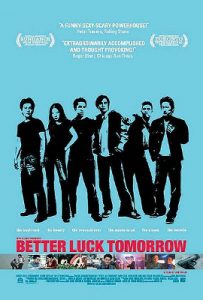
The featured movie for our Tuesday afternoon film viewing this week was Better Luck Tomorrow, the 2002 crime-drama starring famous Asian American actors as the main characters. This was my first time watching the film and was genuinely impressed by the message, mood, and execution of the directors and writers. It showed an alternate perspective from the typically overused wealthy, caucasian suburban high school with drama and sex the main conflict of the story. The story captures the same vibe of ever early 2000s MTV movie, but places Asian American teenagers in the fore front and follows their journeys through academics, parties, money, and a darker side of life people don’t typically expect to see. It is a coming of age film, addressing major stereotypes of Asian American students, however, it is seen from the other side of the spectrum.

The main characters Ben, Virgil, Han, Daric, Stephanie, and Steve were all Asian American students with different personalities and roles at the school. Ben and Daric were over achieving students and athletes, Virgil and Han were standouts yet still academically excelled, Steph was a cheerleader and the only dominant female role, and Steve was the cocky and mysterious boyfriend of Steph. The film followed the main 4 male characters cheating the system by selling cheat sheets for cash. On the surface nobody knew what was going on and they acted normally, going through the same routine. Things began to escalate quickly and tension grew higher, especially with more money and guns involved. The movie ends with a murder and a secret.

Further research of the film after watching led me to discover Stuart Tay and the story of his death which Better Luck Tomorrow was loosely recreating and portraying. Stuart Tay was a 17 year old Asian American student at Foothill High School in Orange, CA. Tay was lured into the backyard by five teenagers from Sunny Hills High School who Tay allegedly recruited to help rob computer parts to flip and sell for cash. The group had not trusted Tay which lead to his murder on December 31st, 1994. The film portrayed the timeline of this story based on the allegations of the case.

Soundtrack of the Nintendo 64

Whether it is Mario Party, Super Smash Bros, or Mario Kart, as soon you hit that power button, you will instantly recognized the music of these classic video games. Growing up playing all types of consoles and game types, I was always intrigued by the soundtracks. The same thing can be applied with movies and film, its the background accents of dramatic climaxes or somber drones that tie into the emotional effect you get from enjoying the medium.

For my paper, I want to explore the music of Nintendo video games that have translated in various forms of pop culture. For instance, hip-hop music is known for sampling (a term used for recreating songs using original sound bites and instruments of established works) with old movies, songs, or video games. An example would be the 19 year old rapper Lil Yachty and his track “Run/Running” where the Mario 64 theme song is used as the main melody.

Here is the Lil Yachty song:

Now here is the Mario 64 file select theme music:

Washington State/Asian American History Field Trip

Our class took a trip to the Washington State History Museum, Tacoma Art Museum, and Chinese Reconciliation Park on Oct. 3rd. Being born and raised in Washington, I had never been to any of these landmarks which was extremely eye opening and exciting. There were a couple pieces of art that captured me and inspired me to share them.

Washington State History Museum

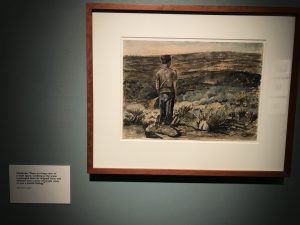
Takuichi Fujii was a first generation Japanese American from Seattle who was a small businessman and well-recognized artist in Seattle during the 1930s. His family suffered from the United States reaction to Japan’s attack on Pearl Harbor and World War II leaving them to be ordered to leave and be removed from their Washington home. In 1942, Fujii’s and his wife and two daughters, along with many other Japanese ancestry on the West Coast, were sent to the Puyallup temporary detention center for 4 months. From there, the family was sent to Mindoka Relocation Center in south-central Idaho until 1945.

This is one of Fujii’s paintings depicting the journey and emotion of the Japanese during the tragic period of misjudgment and mistreatment.

Mindoka, “Here is a long view of a wide space. Looking at the scene unchanged from its original form and without even a trace of people raises in one a fearful feeling.”


Tacoma Art Museum

Roger Shimomura, born in Seattle, Washington in 1939, was a graduate of the University of Washington and Syracuse University, has received numerous awards and features in many exhibits around the world, and maintains a strong connection with the Northwest and aspects of the regions history.

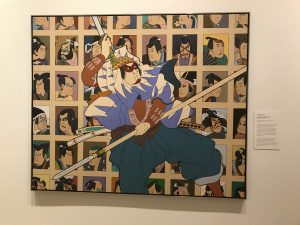
Minidoka No. 5 (442nd) 1979, instantly caught my eye during my journey through the museum. It is a combination of pop art style and simplicity, with bright, vivid colors and comic book aesthetics. Shimomura attempted to “confront the stereotypes about Asian Americans and explores the history, impact, and legacy of racism in America”. The piece of art reflects Japanese American men who were asked to serve in the U.S. Army in World War II even though during this same time had been imprisoned by the U.S. government because of their Japanese ancestry.

K-Pop

Living in Olympia for the past 8 years, my exposure to Korean culture, such as music, language, and food, has been minimal compared to my childhood years in New Jersey. In elementary school, my family moved to Leonia, NJ and I lived there until Freshman year of high school. My Korean grandma (my dad’s side), aunts, uncles, cousins, were all living in New Jersey. The area we lived in was right on the border of New York and New Jersey and most of the population were Asian Americans.

Between family dinners and church on Sunday’s, or watching anime and listening to K-Pop and Korean rap, my entire world was revolved around the Korean culture. My two closest friends who basically showed me all the music, fashion, and trends during my adolescent years were both Korean Americans. Moving back to Washington, where I was born, was tough because I was leaving an entire lifestyle behind that I knew wouldn’t be the same based on the lack of Korean population in the Olympia area.

Joining the A-Pop program, I was hoping to reconnect with my roots and explore Asian/American studies through pop culture and music. This week I wanted to share a few throwback songs from my childhood because my paper is revolved music and the idea of songs associating with memories and feelings in people’s lives.


My Journey with A-Pop

My educational background and focus throughout college so far has been business and music. I took this class to expand on my areas of expertise and incorporate my passions to other cultures and fields of study. Being Korean, I want to learn more about the history of Korea, how my family traditions in America differ from traditions in Seoul, the lack of Korean artists in the music world

K-Pop music, Korean BBQ, Korean New Years, live TV singing competitions (American Idol)

music: how an American artists develops international success in Asian countries (Korea, Japan, China)

Family Television and Movies

Many families, including my own, have busy work and school schedules that cause difficulties to spend time and experiences together. One of my ideas of “home” in pop culture is watching TV with my parents. The idea of being on the couch, sharing laughs or quotes from our favorite films with my parents were very nostalgic and bring a sense of comfort. There are several outlets I plan to explore with this lense of media that apply to my family experiences such as the types of shows or movies we watched, when what other families spend time together doing, the history of the technology of televesion and when they were implemented into American homes, and how Asian/Pacific Islander families viewed television together.

articles on history of television, media consumption by country, surveys on families with televisions vs without


Ghost in the Shell “Whitewashing” Conflict

Our entite class watched the 2017 remake of Ghost in the Shell, a Japanese sci-fi anime from 1995 about the fusion of humans and robots to create cybernetic super humans. The film instantly showed a mixture of the Matrix and Blade Runner with the dark aesthetic, powerful visuals and dramatic slow motion fight scenes. The dominant female badass role reminded me of Kill Bill and the darkness of the film had Tarentino like qualities. However, this movie took mainstream media by storm with its controversial casting of predominantly white actors along with strange dialogue and an unconvincing plot. For instance, famous Japanese actor Beat Takeshi had the only Japanese speaking role while main actress Scarlett Jo (Major) and other supporting cast spoke English. I have never seen the original, Ive only watched the remake one time. I plan to watch both versions mutiple times and analyze this controversy deeper by comparing other texts and media that portray “whitewashing”.

Ex. Japanese roles were significantly demoralized by dominantly white cast (goons, poor housemaids, prostitutes) vs. (elite doctors, CEOs, military generals)