Stuart Tay & Better Luck Tomorrow

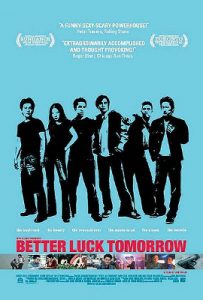
The featured movie for our Tuesday afternoon film viewing this week was Better Luck Tomorrow, the 2002 crime-drama starring famous Asian American actors as the main characters. This was my first time watching the film and was genuinely impressed by the message, mood, and execution of the directors and writers. It showed an alternate perspective from the typically overused wealthy, caucasian suburban high school with drama and sex the main conflict of the story. The story captures the same vibe of ever early 2000s MTV movie, but places Asian American teenagers in the fore front and follows their journeys through academics, parties, money, and a darker side of life people don’t typically expect to see. It is a coming of age film, addressing major stereotypes of Asian American students, however, it is seen from the other side of the spectrum.

The main characters Ben, Virgil, Han, Daric, Stephanie, and Steve were all Asian American students with different personalities and roles at the school. Ben and Daric were over achieving students and athletes, Virgil and Han were standouts yet still academically excelled, Steph was a cheerleader and the only dominant female role, and Steve was the cocky and mysterious boyfriend of Steph. The film followed the main 4 male characters cheating the system by selling cheat sheets for cash. On the surface nobody knew what was going on and they acted normally, going through the same routine. Things began to escalate quickly and tension grew higher, especially with more money and guns involved. The movie ends with a murder and a secret.

Further research of the film after watching led me to discover Stuart Tay and the story of his death which Better Luck Tomorrow was loosely recreating and portraying. Stuart Tay was a 17 year old Asian American student at Foothill High School in Orange, CA. Tay was lured into the backyard by five teenagers from Sunny Hills High School who Tay allegedly recruited to help rob computer parts to flip and sell for cash. The group had not trusted Tay which lead to his murder on December 31st, 1994. The film portrayed the timeline of this story based on the allegations of the case.
Washington State/Asian American History Field Trip

Our class took a trip to the Washington State History Museum, Tacoma Art Museum, and Chinese Reconciliation Park on Oct. 3rd. Being born and raised in Washington, I had never been to any of these landmarks which was extremely eye opening and exciting. There were a couple pieces of art that captured me and inspired me to share them.

Washington State History Museum

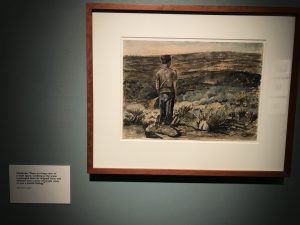
Takuichi Fujii was a first generation Japanese American from Seattle who was a small businessman and well-recognized artist in Seattle during the 1930s. His family suffered from the United States reaction to Japan’s attack on Pearl Harbor and World War II leaving them to be ordered to leave and be removed from their Washington home. In 1942, Fujii’s and his wife and two daughters, along with many other Japanese ancestry on the West Coast, were sent to the Puyallup temporary detention center for 4 months. From there, the family was sent to Mindoka Relocation Center in south-central Idaho until 1945.

This is one of Fujii’s paintings depicting the journey and emotion of the Japanese during the tragic period of misjudgment and mistreatment.

Mindoka, “Here is a long view of a wide space. Looking at the scene unchanged from its original form and without even a trace of people raises in one a fearful feeling.”


Tacoma Art Museum

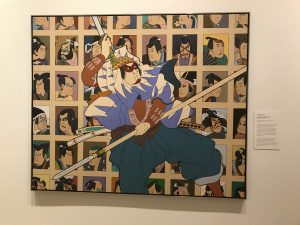
Roger Shimomura, born in Seattle, Washington in 1939, was a graduate of the University of Washington and Syracuse University, has received numerous awards and features in many exhibits around the world, and maintains a strong connection with the Northwest and aspects of the regions history.

Minidoka No. 5 (442nd) 1979, instantly caught my eye during my journey through the museum. It is a combination of pop art style and simplicity, with bright, vivid colors and comic book aesthetics. Shimomura attempted to “confront the stereotypes about Asian Americans and explores the history, impact, and legacy of racism in America”. The piece of art reflects Japanese American men who were asked to serve in the U.S. Army in World War II even though during this same time had been imprisoned by the U.S. government because of their Japanese ancestry.

Ghost in the Shell “Whitewashing” Conflict

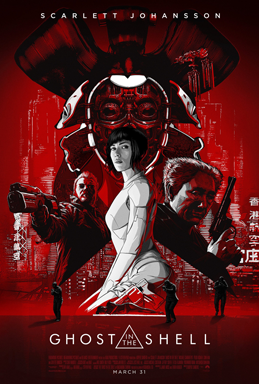
Our entite class watched the 2017 remake of Ghost in the Shell, a Japanese sci-fi anime from 1995 about the fusion of humans and robots to create cybernetic super humans. The film instantly showed a mixture of the Matrix and Blade Runner with the dark aesthetic, powerful visuals and dramatic slow motion fight scenes. The dominant female badass role reminded me of Kill Bill and the darkness of the film had Tarentino like qualities. However, this movie took mainstream media by storm with its controversial casting of predominantly white actors along with strange dialogue and an unconvincing plot. For instance, famous Japanese actor Beat Takeshi had the only Japanese speaking role while main actress Scarlett Jo (Major) and other supporting cast spoke English. I have never seen the original, Ive only watched the remake one time. I plan to watch both versions mutiple times and analyze this controversy deeper by comparing other texts and media that portray “whitewashing”.

Ex. Japanese roles were significantly demoralized by dominantly white cast (goons, poor housemaids, prostitutes) vs. (elite doctors, CEOs, military generals)