Class Notes: Week 6

Tuesday, May 7

Book: “Dark Blue Suit”
Theme: Closure; Family, generations, father/son; hope vs. reality; Community; Fighting (Boxing); privilege; role models; codeswitching; money/poverty; death/mourning; pride; trauma; masculinity; a portrayal of women; coming-of-age

American Is In the Heart by Carlos Bulosan
America Is Not the Heart by Elaine Castillo

Incompletion
Incomplete family, death, death, love, friend

Filipinos in the United States vs. Filipino Americans
the difference of experience and goal; feeling not belong here
Parents have to pay attention to the conversation in Tagalog with children (Language barrier)

Film: “The Debut” by Gene Cajayon (2001)
White friends are making fun of traditional ornaments.

Why Ruben didn’t want them to stay at his house? – Because of his embarrassing. The smell of food. He was embarrassed by his Filipino culture.

Alice who marry a white guy. She looked like being proud of herself. I thought that it’s kinda stereotype of Asian women marrying a white guy.

The gap between Rose and Ruben in term of their identities. She could speak Tagalog and knew a traditional greeting.

Responsibility vs. Pressure: Ruben’s pressure by father; Father’s pressure by grandfather; Father’s responsibility toward his son. Father and Grandfather desired Ruben to go to med school and be a doctor, even he wanted to go to cartoon school. What he wants to do was different from what his father and grandfather expect him to do. Father would encourage him to do what he wants to do if there was no pressure by his grandfather and other family members. Here’s a second generation’s struggle. ?

Gang-star culture vs Filipino culture

Traditional dance at the party

August seemed to be struggling with his white father. His father seemed not to understand the Asian thing. Low key of racist.

The history of the Philippines: The Philippines were always under the control of other countries, Spain, the United States, and Japan.  Mixed culture, HaloHalo.


Wednesday, May 8

Ethnic Studies– nature, origins, and evolution
Ethnic studies at Evergreen: its past, present, and seemingly bleak future
Our program
“Who we be?”
What is Ethnic Study?
What purpose does it serve?
What are the benefits and challenges of being a member of the group that you’re exploring?
What are your responsibilities if you aren’t a member of that group?

What complications arise when ethnic studies is explored through the lens of popular culture?


Friday, May 10

“Filipino American: Final thoughts”
Boxing- one of few entertainments to Filipino American
Boxing Champions  was a hero in the Filipino Community

The Philippines has a history of colonization, always under control by other countries. Spain, United States, Japan. Spain- the reason why Tagalog and other Philipino languages sound like Spanish.
-Importance of learning history: History connects “culture”

The importance of comedy
To me, it’s still hard to understand jokes sometimes because of my English level and knowledge. Jokes vs racism. I’m confused. But, we can acknowledge culture by comedy. But, we still need to pay attention and be respectful. I learned the importance of comedy and how comedy as pop culture influent to us.
D&R: Week 6

Cultural Appropriation

I was not familiar with it. To be honest, I couldn’t understand what it means before I took this program.

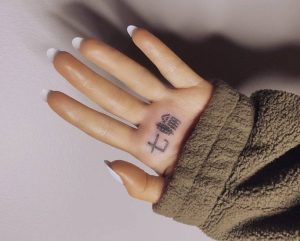
I read one article in Japanese which is about cultural appropriation. And it was arguing Ariana Grande’s tattoo is cultural appropriation.


https://front-row.jp/_ct/17247342

I still remember when she posted this picture on her Instagram. At that time, I was sorry for her. As you may know, it doesn’t mean “7 rings”, that’s why I felt sorry for her. But also, I felt her love of Japan. Honestly, my thought was just these things. I think that my Japanese people who saw this picture also thought the same things.

However, I read the article in the United States that said it could be cultural appropriation. Even many Japanese people didn’t think like that, here was different. (I’d like to know what Japanese-American or Japanese in the United States felt). Since Japanese people are not comparatively familiar with the concept of cultural appropriation, they didn’t think it was the appropriation of Japanese culture.

In my opinion, I don’t say that her tattoo is cultural appropriation because I know how she likes Japan by her studying Japanese hard and a lot of her concerts in Japan, at least I think that she has respect to Japanese culture. As long as I learned about cultural appropriation before, respect for other culture is important and the key to figuring out if it is cultural appropriation.

Also, I can say from this topic how Japanese people are familiar with the concept of cultural appropriation. These days, society in Japan is getting more diverse. If they don’t know that concept, the problems will definitely happen. Actually, some cultural problems, such a black-painted face on TV-show, happened in Japan because of the lack of knowledge of culture and ethnicity. It’s for Japanese people to think about our culture and other culture, and diversity.

Talking Points: Dark Blue Suit

  • Dark Blue Suit
    1. “He didn’t talk much, at least not to me. Maybe it was the language. Mine was native English–fluid, made in America. His was borrowed and broken, a chore just to speak; Dad preferred Cebuano. The English I did hear from him I imagined he saved, hoarding words that twisted his tongue. To me, they came mostly in the form of monosyllabic blasts, barked commands to ‘do dis, Buddy… now.’ And of course, ‘dis’ got done– now, never later.” (p. 5). It’s about the language barrier between first and second generation. And it describes how that language barrier was, and I’ve never read these descriptions of the actual language barrier.
    2. I saw the language barrier in the movie, too. But I felt awkward with father’s saying, which shows obviously broken English, in the book.
    3. I wondered what accurate English is? Even father speak broken English, it’s English, may be called Filipino accent English. Is there anyone who correct their English? I thought that even in the same country, English is not only one. Of course, there’s various dialect in the United States. But also, various accent from other countries. I thought that all of them are accurate English.
    4. “Although my father spoke English badly, he did it well enough to make me stammer” (pp.12, 13).  This sentence represents their language barrier. The child has the advantage of English.
    5. By Stephanie “I’ve got a future. I’m half white.” (p.19). She looked down on Buddy.
  • Rico
    1.  Filipinos and black music, not white music. “Filipinos always hired black bands”(p.28). Black music? What does it imply?
    2. “White guys do it all the time. Like marriage.” (p.34). I wondered how Filipinos were felling for going to war for America and if they were feeling uncomfortable with that.
    3. “It’s hard, ‘specially’ cause you and me are like this” (p.37). It was hard to go to the war to white. But, it might be harder for people of color.
  • The Second Room
    1. Public school in the U.S. “not to advertise” and “Nothing commercial” (p.39). Education for advertisement? commercial?
    2. “Respect- the most precious currency of the poor and colored” (p.43). How important to respect each other, to everyone, everywhere, every time, is. Through sports, we can get “respect”, whatever race, not by just fighting in public.
    3. Recently, I participated in the volleyball league in Lacy. I was kinda afraid because I’m a foreigner. But, in sports, no one shouldn’t be eliminated whatever our race. Just play by our own style and do our best.
  • August 1968
    1. Between Asian Americans, racism also exists. In this chapter, the conflicts between Chinese and Filipino was expressed.
    2. Poverty. Poverty is related to race historically.
  • Home
    1. The different issues between first generation and second generation. The second generation would get a better education and could have a better future than the first generation.
  • A Life Well Lived
    1. Nostalgy. Old Filipino hoped to die in the Philipines.
  • Stephanie
    1. White identity, Filipino identity, and mixed identity. How identity is created. Is it also the identity that is provided or seen by other people?

Final Project Updates: Week 5 (In progress)

Week 5: A detailed outline of your essay, including items you might imbed in your essay

  1. Introduction
    1. The definition of Pop Culture
    2. The definition of Asian American
    3. The definition of Queer culture
  2. Queer culture and Asian culture in Pop Culture
    1. The history of a drag show and drag queen
    2. Brief introduction of “RuPaul’s drag race” as Pop culture
    3. Asian and Asian American in “RuPaul’s drag race”
    4. How Asian American drag queens represent their Asian culture in the drag show
  3. Gay Aian American drag queens
    1. The stereotype of Gay Asian American
    2. Race and Racism in the LGBTQ community
    3. The struggles as Gay Asian American queens
  4. Conclusion

Class Notes: Week 5

Tuesday, April 30

Book: “The Chinaman Pacific & Frisco R.R. Co.”

Heroes- manhood/ masculinity, cowboys “the west”; incest; time/ linearity- watches, the railroad, food; identity crisis; Chinatown; death

Railroad- thousands of people died to build railroads in the past

What the author’s love of Chinese American is? He involves anger in this book. The community in Chinatown is dead. Maybe, the experience in Chinatown?

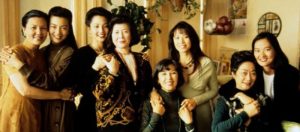
Film: “The Joy Luck Club” (1993)

Image: https://missionplayhouse.org/event/joy-luck-club-1993

8 women’s stories: Lindo and her daughter, Waverly. Ying-Ying and her daughter, Lena. An Mei and her daughter, Rose. Suyuan and her daughter, June.

Three generations- grandmother in China, mother immigrated the United States, daughter born America. Women’s issues, generational issues, traditional things.

Waverly: When Waverly was a child, she was embarrassed by her mother’s showing off her chess. Children are not parents’ property to show off. Hope and expectation are different.

Lindo: Lindo had a hard experience when she got arranged marriage.  It was a part of how arranged marriage was like. She was like a slave, there was no right for her. I thought that cultural or traditional things are sometimes hard and sad.

Waverly-Lindo: Lindo made arranged marriage for Waverly. However, it didn’t work well and in the result, they divorced. Then, Lindo got mad because it was Waverly’s fault.

Waverly-Lindo: Waverly’s white husband didn’t understand the chinese culture at the dinner. When he put soy source in Lindo’s meal, Lindo got shocked. Food is also culture. When people have a different food culture, they should respect it. Lindo grew up in Chinese and grew up with Chinese food culture. She has own Chinese food culture. I bed what that husband did was really shocking for her. For the first immigrant generation, sometimes it’s difficult to recognize, accept and fit (I don’t say they should though) a new culture.

This movie describes wide issues of parents and their children and generational issues. Parents’ hard experiences in China and America, and daughters’ hard childhood and adult’s experiences in the U.S.

Ying-Ying: After she got married in China, she was cheated. She lost her son. In her story, also the patriarchal system has existed.

Lena: She got married to Asian American(?). Her husband was too strict to be fair. I wondered if this setting was necessary. I didn’t know what his character implied in this movie, compared to other stories.

An Mei: Her mom was kicked out of her husband’s house. She got married to another guy and it was awful. Polygamy is? was? a part of Chinese culture. But, it was hard for her.

Rose: She was trying to keep a good relation with her husband like by giving a present. Once she realized her own worth, she knew that she didn’t need to do that.

June and Suyuan: I didn’t know why Suyuan kept swan feather for June. But, I imagined even though there were a generational gap and language barrier between parents and their child, swan feather might imply family love and common culture which they had, something crossing over their struggles.


Wednesday, May 1

D&R

Lecture: Documentary film, Kungfu 

In the U.S., is there any conflict between teacher (master) and students? Such as a passion or motivation for Kungfu.


Friday, May 3

“Chinese American: Final Thoughts”

Respect for other culture
-Food culture (From The Joy Luck Club): When Waverly’s family had dinner with her husband, didn’t understand Chinese traditional food culture, which Lindo cooked. I thought that there was less respect for Lindo’s meal. Lindo and even Waverly got upset. When we meet a new culture, we must have respect mind to it and people who are related to that culture.
-Media
If the media like film and TV-show represents any culture, it has to represent that culture carefully. It shouldn’t be for an economic reason or just for amusement.  Respect for other culture is necessary. If there’s a lack of respect, definitely it’s cultural appropriation and people with that culture get hurts by it. We must carefully think about other culture with respect.

D&R: Week 5

“Crazy Rich Asians” (2018)https://globe.asahi.com/article/11839306

The romantic comedy “Crazy Rich Asians” was released in 2018. To be honest, I’ve not seen this movie yet, I just read its outline. So, I can’t criticize it deeply. As the title says, this movie is about Asian American’s successful story. Actually, rich Asians have become the highest-earning group in the United States. However, this is not the whole image of Asian American.

Income Inequality in the U.S. Is Rising Most Rapidly Among Asians

Income growth among poor Asians has largely stagnated. From 1970 to 2016, the income inequality of Asian American has become the greatest among America’s major racial and ethnic groups.


The reasons of this gap are the level of education, skills and English ability. The income of Indian and Chinese is higher than South-east Asians. This is because the level of education of Indian and Chinese is higher than others.


The movie:

In that movie, the characters are living in New York City. Lee, who is Chinese American, works as a senior designer. He and his sister, Jessica, graduated from colleges. And their parents did not. When they came to the United States, they had hard time to make their living. I thought that many first generations are struggling to find jobs and earn. In this movie, second generation, Lee and his sister received their benefits.

They are living in New York City. However, Asian immigrants living in New York City are in the poorest immigrants group. The number of them is increasing rapidly. From 2000 to 2016, it increased from 170,000 to 245,000. I’m curious how poor Asian Americans are described in the movie, like Lee’s parents.


Transition of where Asians from:

In 1970, Asian Americans are mostly from East Asian countries. These days, people from South Asian countries immigrants here. And now, the number of Asian American from South or South-east Asian countries is bigger than from East Asian countries. The issue of this income gap is connected to their countries’ issue too. I’m interested in this topic because it’s connected to my major, developing economy in South-east Asia, in Japan.

Limited English:

In this article, according to Dr. Lee, 35% of Asians have limited English. Limited English affects income, education, and the access of health care.


Again, I’ve not seen this movie. I also had the image that Asian American is in the highest income group because I saw the data that the income of White and Asian is higher than other ethnic groups. This movie could emphasize that image and hide the reality of the other side of Asian American. Given this knowledge, I’d like to watch this movie.

Final Project Updates: Week 4

Week 4: A list of preliminary sources, each accompanied by a short statement explaining why it’s potentially useful to your project.


Books: 

1. The makeup of RuPaul’s drag race: essays on the queen of reality shows

This book explains TV-show “RuPaul’s drag race”‘s ambivalent appropriation of pop culture. I can learn how one of these queer culture is replaced as pop culture, especially in TV program.

2. Asian Americans in the Twenty-first Century

One of interviewees in this book, “Being Asian, Being Gay”, talks about  struggles as gay identity and also as Asian American identity in term of generational gap.

3. Q & A: Queer in Asian America

This book is about queer Asian American and includes interviews of Asian American who identify as Queer. From various aspects by many interviewees, I can know their struggles and the issues of queer Asian Americans.

4. Geisha of a Different Kind

This book “shows to the internationally sought-after Thai kathoey, or “ladyboy,” to construct a theory of queerness that is inclusive of the race and gender particularities of the gay Asian male experience in the United States” (https://nyupress.org/author/c-winter-han/). This book is really connected to my topic. I can see how Asian American queer community (intersectional issue of race and gender) is like in the United States. And also, the author is talking about Thailand’s kathoey.  I can learn the different situation of drag show in Asian country.

Jornal Article:

5. When the Girls Are Men: Negotiating Gender and Sexual Dynamics in a Study of Drag Queen

This article explores a troupe of self-identified gay men who perform as drag queens. I can learn the introduction of drag queens, their role in the community, and their public performances.

6. The trouble with “Queerness”: Drag and the Making of Two Culture

This article explains an ethnographic case study of gay and lesbian performance cultures. The author argues “to move beyond the theoretical quagmire born of “queer” ’s function as both verb and generic, we must adopt a new intellectual paradigm that views relations as the conditions of possibility for embodiment and discourse alike”(p.304). It can be connected to how new culture is accepted or recognized.

7. Out Here and Over There: Queerness and Diaspora in Asian American Studies

This article talks about intersectional issues of Asian American and LGBTQ identity. I might be able to see the struggles of LGBTQ and Asian American, comparing to non-Asian Americans LGBTQ.

Others:

8. Lavern Cummings & David DeAlba

This youtube video shows the revolution of drag queen and how Drag queen has changed from the 1920s till now. I can know how the drag queen has changed visually and the symbolic meaning of drag queen through the history.

9. “RuPaul’s drag race” series (Wiki / IMDb)

This TV show is recognized as one of American Pop Culture. I’d like to use this TV-show  to describe how drag queen and drag race are like. Through this TV-show, I can see how Asian American drag queens utilize their Asian culture, in term of costumes and performances.

10. RuPaul’s drag race wiki

This website is useful for searching drag queen’s information. I’d like to use this page for researching Asian American drag queen’s profiles, such as their ethnicity, early life, career, personal life.

11. Best of Gia Gunn: A Fishy Girl | RuPaul7s Drag Race All Stars 4

Gia Gunn (Gia Ketaro Ichikawa) is Japanese American Drag Queen who was in “RuPaul’s drag race” season 6 and All Star 4. Also, she is known as trans woman. As you can see in this video, she integrates Japanese culture in her performance. Through these video, I’d like to see how Asian American drag queens integrate their Asian culture in a good way.

12. How “RuPaul’s Drag Race” has influenced pop culture

This article explains how this TV show connects with Pop Culture. I’d like to see how this TV show has evolved and has been known by many people in the United States.

13. How ‘RuPaul’s Drag Race’ came to dominate pop culture

This is also about similar topic with No.9. The content is similar but, I might see some different views of the history of this TV-show and relationship between Pop culture and RuPaul’s drag show.

14. 34 Drag Performers Around the World Sound Off on the Influence of ‘RuPaul’s Drag Race’ & More

This article has 34 drag queens’ and kings’ interviews about the connection between drag race and local drag shows around the world which are not recognized as pop culture but queer culture. Some of them are talking about the situations of the local drag show in Asian countries.

15. The Fierceness of ‘Femme, Fat, and Asian’

This article is the interview of the author, C.Winter Han, of the book “Geisha of a Different Kind”.  He is talking about the stereotype of gay Asian Americans. Also, he talks about Asian American drag queens in Rupaul’s drag race.

Representation of Asian Culture; Stereotype of Gaysian American; Asian Immigrants (generational gap; the way of coming out)

16. ‘Sorry- Love You’: Asian Americans on ‘RuPaul’s Drag Race’

Asian Americans on RuPaul’s drag race
Representation of Asian Culture

17. Kim Chi: The First Drag Queen

About Kim-chi

18. Q and A with drag sensation Kim Chi

interview of Kim Chi

19. Drag queen Kim Chi hopes to spread Korean culture to the world

Class Notes: Week 4

Tuesday, April 23

Frank Chin is one of the god father of Asian American writer

Novel vs Poetry

-Precision (正確性)

-Concision (簡潔さ)

-Writer can leave readers to expand their own idea

“Seventeen Syllables and Other Stories”

Tension between issei and nisei- Every story touches

俳句(Haiku)- Privileged art

Film: “Come See the Paradise” by Alan Parker (1990)

I was surprised the laws that Japanese couldn’t own their own theater during that time and Japanese couldn’t marry non-Japanese in the area of California.

The scene when Lili said “break them (Japanese records)” , it was really sad. When they moved to the camp, they had to leave anything related to Japan. It’s a part of their culture, and their lives.

One thing about casting, I felt uncomfortable a little bit. Mr. Kawamura who was born in Wakayama, Japan, and moved to America was played by Sab Simono, who’s Japanese American actor. When he was talking to other Japanese business men in the beginning of the film, i thought that his Japanese was kind of awkward a little bit compared to his wife’s Japanese. I’m not sure if it was on purpose or not and also the detail of Mr. Kawamura’s background. If the film didn’t care about the fluency of speaking other language, it could be an issue in term of respect of other culture. The fluency of language is also important to express culture in the film.


Wednesday, April 24

Fumiko Hayashida

-Bainbridge Island

-Manzanar Concentration Camp

1990 Gulf War

1988 Amerasian (Person who is born in Asia and have American military father and Asian mother) Homecoming Act

1988 Civil Liberties Act (reparations)

Alan Parker (British director): Mississippi burning (1988)

“Mississippi summer of 1964”

-Andrew Goodman, Michael Schwerner, James Chaney


Friday, April 26

Japanese American Presentation “Studio Ghibli”

D&R: Week 4

Asian Americans Respond To Racist Comments


On this video, they are responding in a good way or kind of funny way to overcome racism. Racist comments are sorrowful, but racism still exists in the U.S., and all over the world. Some people do it unconsciously. Others do it consciously. This video shows us one of the ways how we can behave when we face to racist people. I’d like people who do racist things unconsciously to know how racist their comments were and how these comments hurt others. Also, as one of Asians, I’d like to overcome these racism by doing these responds.

Talking Points: Seventeen Syllables and Other Stories

1.The High-Heeled Shoes, A Memoir

  • This story describes the sexual harassment which occurred to the storyteller and other women and how the status of women was at that time.
  • As Japanese or Japanese American, and as women, and also as Japanese American women, they have struggled hard during that time, probably even now. It’s important to discuss these issues in society.

2. Seventeen Syllables

  • This story tells how the relation between issei and nisei was like. It  expresses generation gap. I thought that nisei has more assimilated into American society and culture, but still issei might not get into that. It seems to be difficult to do both of keeping own culture and assimilate into new culture.
  • Also, I saw strict Japanse patriarchal system in this story.

3. The Legend of Miss Sasagawa

  • This story shows generational gap between issei and nisei and intersection of ethnic and patriarchal oppressions.
  • Because of the different levels of consciousness by issei father and nisei daughter, it’s really hard to understand each other.

4. Wilshire Bus

  • This story describes nisei’s anger and sadness of racism and enforced confinement.
  • “Why don’t you go back to China, where you can be coolies working in your bare feet out in the rice fields, you can let your pigtails grow and grow in China. Alla samee, mama, no tickee no shirtee. Ha, pretty good , no tickee no shirtee!” (p.36). When white guy said this to Chinese couple, Esther pretended ignorance he feels sorry about them, but also he didn’t feel sincere sympathy.
  • After enforced confinement, Japanese American was called “model minority” because many Japanese Americans assimilated into white culture. This story describes that situation, too.

5. The Brown House

  •  This story shows patriarchal system of Japanese and how women’s right and freedom were not free. Even though women’s right and liberty are improving in recent Japan, still the role of women as wife is replaced in some animation or film.
  • In this story, the connection and situation between Japanese American and African American are expressed.

6. Yoneko’s Earthquake

  • This story shows how Japanese American see Filipino American. There were prejudice against Filipino American and  movements for avoiding marriage with Filipino American.
  • I was curious if Yoneko’s mother fell into love with Marpo even Yoneko liked him.

7. Morning Rain

  • This story implies generational gap between Issei father and Nisei daughter in term of difference of tradition and value.
  • She married American man and there were awkward situations between issei and nisei.

8. Epithalamium

9. Las Vegas Charley

  • Charley reacts against issei’s lifestyle and culture, identifies himself as American. This story shows conflicts of “Japanese or American.”
  • In term of food, using position of person feeding someone and also as person being fed, he established the relationship with others.

10. Life Among the Oil Fields, A Memoir

11. The Eskimo Connection

12. My Father Can Beat Muhammad Ali

13. Underground Lady

14. A Day in Little Tokyo

15. Reading and Writing