Fermented alcoholic drinks have long been a component of human societies – Ninkasi – the Sumerian goddess of beer, now serves as a namesake for a popular brewery in Eugene, Oregon. Beer is typically composed of four base ingredients: grains (typically barley), hops, water, and yeasts. From 2008 to 2015, the amount of breweries in the United States more than doubled from 1500 to 3500,[1] due to the proliferation of independently-owned microbreweries. Often these breweries tout their products as “local beers” – but is it possible to tell where ingredients used in American breweries actually originate?
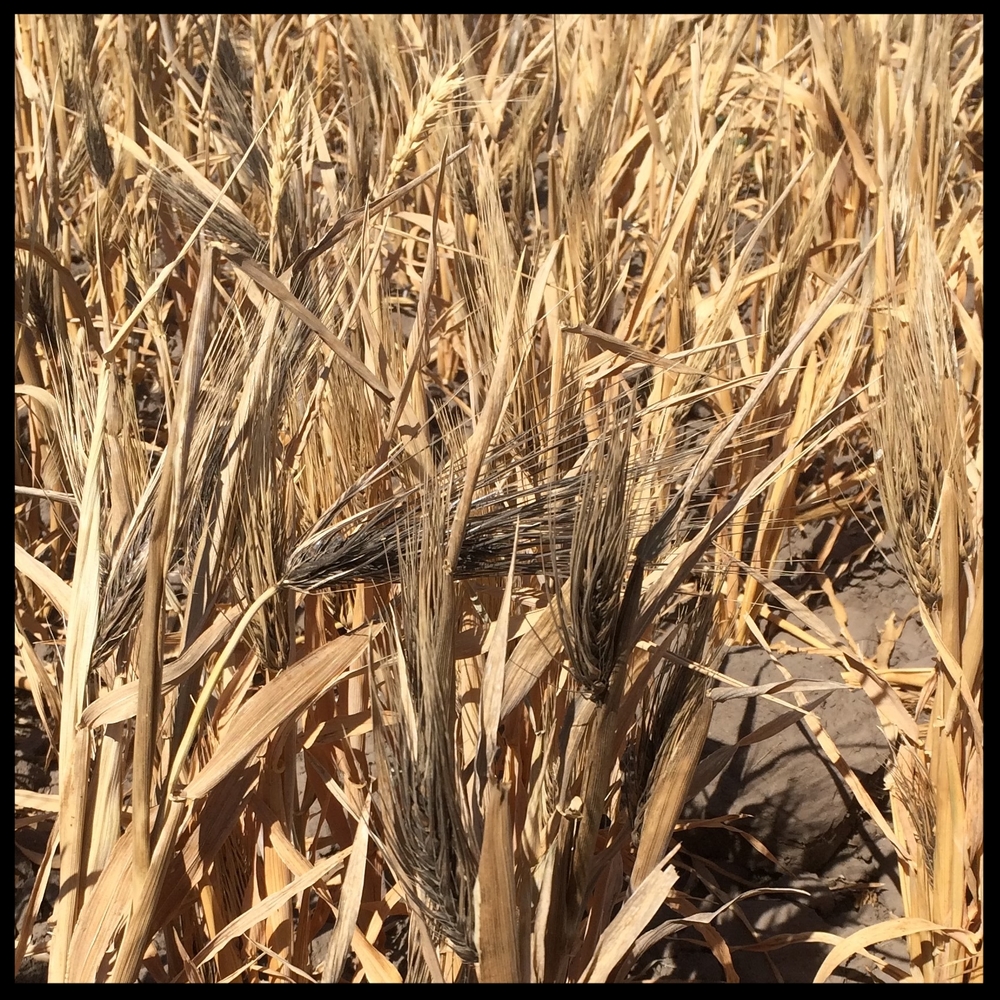 Purple Egyptian Barley from Palouse Heritage
www.palouseheritage.com
Barley is the fourth-most cultivated crop in the world[2] – it’s an adaptive grass that has long been used as a staple-food, for livestock feed, and as a material for distilled beverages. Grains used in beer are often “malted” – to make malt, a grain like barley must be germinated and then heated to terminate further germination – this process converts starches in the grain to sugars. In 2009, the state of Idaho produced a staggering 2.6 billion pounds of barley, or 28 percent of the total barley produced in the United States.[3] There are a primarily two companies who malt grain in bulk on the west coast – Anheuser-Busch and Great Western Brewing Company. These companies will facilitate crop contracts with local barley producers to secure supply for their malting floors. After the barley is acquired after harvest, it gets aggregated in these companies’ malting floors and produced into bagged malt which is then distributed to local breweries. After the barley is aggregated it becomes impossible to tell from where the barley originated.
Two smaller malt companies have recently started in the Pacific Northwest – one being Skagit Valley Malting, in Burlington, Washington State, and another being the Local Inland Northwest Cooperative in Spokane, Washington State. These two companies have started producing identity-preserved malts – or malts that can be tracked to the field in which they were grown. As consumer demand grows for transparency in the agricultural supply chain, identity-preserved malts offer a way for people to truly know origin of the product they are consuming. As the craft-brewery scene becomes saturated, will identity-preserved malt provide a way for breweries to distinguish themselves and provide a better product?
[1] http://time.com/money/4596638/america-record-high-craft-breweries/
[2] http://www.fao.org/faostat/en/#data/QC
[3] https://barley.idaho.gov/pdf/quality_reports/2009.pdf