Final Presentation
The Many Coalitions
Among the many resources available lie few that offer the whole picture. Throughout a lot of my research, the two that seem to provide the most information appear to be The Farmer Veteran Coalition and The Young Farmers Coalition.
Whether or not you are a veteran, I would access their website and check the links available. More often than not, they lead to avenues that pertain to all people rather than just veterans. There are many aspects of these organizations that I find appealing that valuable not just for myself but for anybody interested in agriculture and starting their own business!
The Young Farmers Coalition has a lot to offer. This organization not only supports local farmers but it provides a plethora of resources such as access to business management classes, social events to bring together community, and educational workshops. I find it incredibly important to have a community and support group in place to help myself get through some of the hardships in decision making! I always like to keep that in mind. These guys also offer access to such resources that provide loans for business. There is even access to grants to certain young farmers.
One major factor that might contribute to one’s inclination to join The Young Farmers Coalition is that there is a fee, minimum of $35. It just might be worth the investment, however.
The Farmer Veteran Coalition does nearly the same thing but they offer resources that cater more towards veterans. Often times I’ve noticed that there are similar perks between the two coalitions. One of the upsides I like about The FVC is that they have a “Homegrown By Heroes” label that can be helpful marketing tool when promoting Helsing Junction. Essentially it’s a label certifying that the farm is indeed owned by veterans. Eventually, Zack and I will attain this label and promote ourselves on JBLM! These guys also have a couple of grants that are available to veterans which can help to renovate an existing business or purchase equipment. Check it out!
Both of these organizations offer discounts to certain companies that can benefit a young farmer! My personal favorites include discounts to Johnny’s Seeds, FarmTek, Kubota, and Tractor Supply Co.. This is just naming a few of their partners. The FVC and The YFC both have their respective sponsors and supporters that offer discounts and deals.
There are two more organizations that are fantastic resources are USDA and Enterprise For Equity (e4e).
The USDA Link is on par with what both the prior coalitions have to offer. The upside to the USDA link, is that it has access to NRCS and other federal programs and grants. I would recommend doing some digging in this area. They also have a tab for veteran farmers, as well. Over the last few months Arden Borden, a colleague of mine at Helsing and former POF Student, has maintained an excellent relationship with the NRCS which tends to make grant writing much easier. Already we’ve been awarded one grant from the NRCS for $2,000 to purchase a piece of equipment for our tractor to improve soil quality. Trust me, it’s well worth it to dedicate time to research grants. Did I mention that the people working with the NRCS are truly dedicated to helping the farmer? If I haven’t, then let me mention, they are amazing people. They truly have the farmer in mind when helping! This truly makes it much easier and more fun to work with people just as passionate as the person embarking on the journey of farm ownership.
Understanding the Business
There are many aspects to farming that need addressing in order to be successful. To me, the most daunting of them all is the business-side of it all. I don’t really have much experience when it comes to business management so this is where I likely need to devote most of my time during this transition. Fortunately, there are many resources that offer assistance and direction when trying to assert the ever challenging crunching of the numbers. A few organizations that I would recommend would be The Young Farmers Coalition and the Farmer Veteran Coalition. These folks will set you up with plenty of information to get you started. Feel free to check out my post titled, “The Many Coalitions” to learn a little bit more. Another resource that is valuable is Enterprise for Equity.
For those that are interested in agriculture, they do have a specific “Agri-Preneur” program which is a three part program to give you the tools needed to understand farm-focused business. Personally, I have yet to register and attend due primarily to scheduling conflicts, but it’s certainly one of the highest on my priority list. Once you finish the program, you also have access to certain perks such as different rates on micro-loans and mentorship. This truly seems like a valuable tool and would encourage anyone to take advantage. Those of you who don’t have an interest in agriculture, they also offer general business programs as well an “Art-Preneur” program which I would imagine is essentially the same as the agriculture focused program in regard to mentorship, and various perks.
The resources that I have been using are mainly from books. Typically I’ll cross-reference from the few different books that I have. Here are the ones that I’m currently using: Crop Planning for Organic Vegetable Growers by Frederic Theriault and Daniel Brisebois, Fearless Farm Finances by Jody Padgham, Craig Chase, and Paul Dietmann, Sustainable Vegetable Production From Start-Up to Market by Vernon P. Grubinger, and The Lean Farm by Ben Hartmann.
Although there is great information in all of these books, I find the most use out of Crop Planning for Organic Vegetable Growers and Sustainable Vegetable Production From Start-Up to Market. One of the major differences that I’m experiencing from the beginning is the fact that I’m working to procure a financially viable business with models and markets already in play. However, I find it important for myself and Zack to start from the beginning, as if this were a business starting at step one.
The two books I listed are the one’s that I cross-reference the most. Whenever I’m working on running numbers for a budget and such, I’ll have these open. The Crop Planning book is light, quick, and easy. It’s to the point and helps you understand in more broad strokes. The Sustainable Vegetable book is a little bit more in-depth and detailed which is fantastic when needing a little more insight as to “why” the decisions being made are important.
I’m now going to get into a little bit of detail about some of the early steps Zack and I have made in trying to hash out a budget.
First, we began with labor. We tried our best to come up with a wage that would work best with everyone which in most cases reflects experience and skill. In establishing labor costs, we decided to estimate costs and set them as salary for budgeting sake. With all of our employees, both part-time and full-time, we predict around $200,000 in costs. The typical word of advice is to double this amount to account for the rest of the years expenses. Doing this leaves us with a projected $400,000 goal to cover our total expense. Fortunately I have past Profit and Loss statements, and Balance Sheets, to make a rough estimation on what we can plan to spend on other facets of farming such as fertilizers, supplies, and fuels.
After we established our projected expenses, we estimated our total gross income with a 500 member model. Basically, to determine this, I looked at our 2018 member subscriptions and scaled it down to fit our scale. This left me with:
Large Shares – 60 Members @ $47/Share
Medium Shares – 255 Members @ $36/Share
Mini Shares – 185 Members @ $31/Share
We also added our three largest “add-on” shares. Fruit, 170 members, $25; Flower, 50 members, $15; Storage, 30 members, $55 (one-time).
When we add these together after multiplying Members by Price then multiply that by the number of weeks (20 in our case). We then added the final Storage share at the end since it’s a one week share. This left us with a total projection of $456,350!
We were very excited for these results and hope that we can make this a reality. This is only a portion of our plan so far, and it’s coming together smoothly.
Organic Certification
Every year Helsing Junction Farms hosts an auditor from the Washington State Department of Agriculture tasked with one thing: inspect the farm per organic certification standards. I’m not really surprised the depths the inspector dives to when conducting an inspection to determine whether or not a farm is deemed worthy of that ever so valuable stamp, “USDA Organic.” There are a plethora of records that need to be maintained throughout the season, and all of which need to be verified accurate by the inspector upon request.
WSDA Organic Certification Brochure
I’ve linked above the brochure that briefly describes the process for becoming certified organic in Washington State. Keep in mind, Helsing Junction has been certified organic for many years now so the process I’m describing is the inspection for recertification, not initial certification!
The inspection began at 9 A.M. on the 9th of October with a person named Dan Coyne, the Certification Coordinator for WSDA. He seemed to be pretty laid back upon initially meeting him, but the moment he began the inspection he gradually spoke with more intensity and tact. He made it very clear that he was there to do a job, and it’s nothing personal about his role. I think he was just giving everyone in the room warning that his questions will be direct, and he won’t move on from his question until he felt it was fully answered. After his brief introduction, Dan started making requests for certain records such as; Fertilizer Application Logs, Greenhouse Logs, Seed Logs, Crop Plans, Crop Lists, Receipts for all products purchased for the farm, and all cash flow specific to each crop. I’m sure I’ve missed a few but my point being that the inspection is thorough.
CSA Management
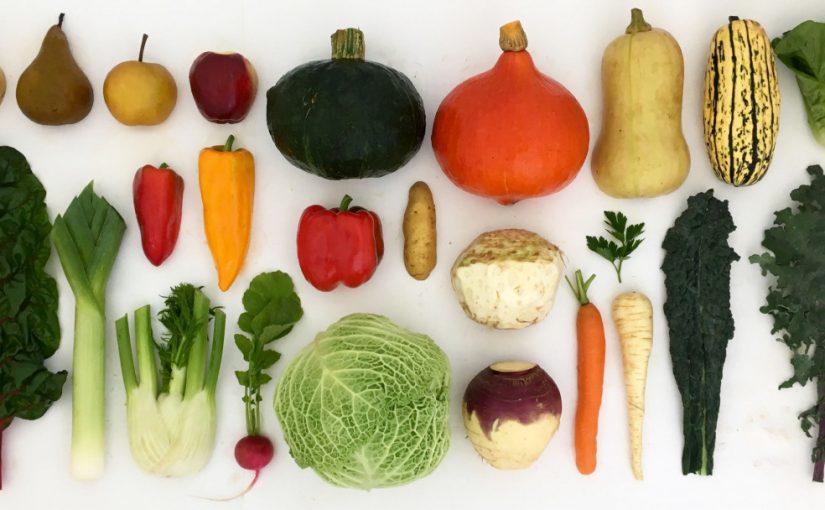
Helsing Junction Farms has been a long standing CSA (Community Supported Agriculture) model, organic farm delivering to the Olympia, Seattle, and Portland area. Their member subscriptions have ranged from 75 to 1300 members over the course of their 28 years running HJF. This year we had around 950-1000 members on 32 acres, which was “scaling back” compared to the 2016 and 2017 seasons. CSA Management entails many things such as; Membership/Customer Relations, Share Management, Online-Store Management, Delivery Route and Drop-Site Management, Harvest Projections, Pack-List Management, meanwhile within these responsibilities lie such important tasks such as field walks at least twice a week, developing a weekly newsletter, and maintaining relations with partner producers such as OlyKraut and Provisions Mushrooms to name a few. Luckily I have a couple great teachers willing to take some time to show Zack and I the ropes.
Farmigo! CSA Management Program
One of the first things they introduced to us is a program called Farmigo. The majority of CSA Management responsibilities can be handled within this program, which makes things a little more convenient. As with anything there are some hardships we face when it comes to using this program whether it be user error or some sort of program glitch. Of course, it’s always the program’s fault according to everyone that uses it! Naturally, I couldn’t agree more. Farmigo offers many services with a subscription to their program.
Farmigo Video Tutorial. Great insights into what that Farmigo provides.
Basically, what I’ve gathered from working with Farmigo is that it’s a program that is used to account and manage the inventory (crops) from harvest to delivery. It also allows the user to manage the weekly CSA boxes (shares). By this, I mean that it lets us assign produce to boxes. In a sense, it’s designing what is to be delivered and therefore harvested to fill the request of what goes into each share. A lot goes into account when deciding what’s going to be in each different type of share we offer. We offer sizes and varieties such as a Large Share, Medium, Mini, Chef, Paleo, Healing, Bulk, Mushroom, Flower, Cheese, Yogurt, Meat, Canning, Juice, Snack, and Fruit share. I would not be surprised if I did, in fact, miss one or two. Anyway, the things that need to be considered are things such as what’s ready in the field, and what each respective share has received in weeks passed. Ideally, with proper planning and the luck of everything working out without any hiccups in production, this would be relatively easy to predict. However, the the best method is always just getting a set of eyes in the field and doing a thorough field walk to determine exactly what’s available and ready to be distributed amongst your members.
At this scale, our administrative personnel of the farm usually takes care of the partner shares like the mushrooms, cheese, yogurt, meat, krauts, and chocolates. Hopefully by next year it will be predominately Zack or myself that are taking on this responsibility with the potential for delegating one of our teammates with this key role.
Our week is usually pretty predictable in regard to knowing that we can expect light harvest somedays, heavy harvest others, and similar with packing shares for delivery. Mondays we usually try to harvest some of our heartier veggies. Only in preparation for the rest of the week. We typically have a smaller delivery of 250-275 shares to be delivered to the Seattle area. Therefore, harvest is relatively easy. Tuesday morning, we come in first thing in the morning and begin to pack boxes with yesterday’s produce. This makes for a pretty hectic morning, but for the most part things go well. It’s nice knowing Zack and I are on the same page when it comes to finding ways to make things more efficient. Anyway, we have to get all the shares packed typically before 830, but 9 at the latest or should I say on a good day. After the delivery truck leaves, we begin harvesting for Wednesday morning “pack-shed.” Again, a similar routine for Thursday morning and Friday, being a day that we don’t have delivery, we can spend in the field. On average, I would say I work around 95 hours every two weeks. My personal best is 127 hours!
This is what a typical week during the CSA season looks like at HJF. This is only in regard to the CSA aspect of the farm. There are many other responsibilities and tasks that are constantly ongoing throughout the season. I’ve come to realize that you can’t plan a damn thing in farming. It’s really just guesswork and compromise. Which is really the fun behind it all. Farming is puzzling all the live long day and compromise when things aren’t perfect.
Stepping into a new role
*Helsing Junction Farms releases newsletters often. I will be sure to include the link if there is any sort of relevance. Here, in part:
https://mailchi.mp/3ccd189d55aa/newsletter-week-10
It’s the beginning of fall and things are really starting to shift at work. The exhaustion of the entire growing season is catching up to all of us. We all seem to be riding on the adrenaline of the season’s ending to help us see the last few weeks through. I can safely say it’s been one hell of a ride. I know this all may seem a little quirky to feel this way about farming, but you truly have to love this life to get through it with a smile. All in all, we had a fantastic year. I’m sure by now you’re wondering why this post is titled, “Stepping into a new role.” Well, after a tremendous amount of thought and deliberation with my business partner as well as many other mentors and teachers, I have decided to embark upon the journey of being a co-owner of an all ready established organic farm named Helsing Junction Farm. Over the last couple of years I’ve had the fortune of working with Susan Ujcic and Annie Salafsky at the farm and once I learned they were looking to eventually hand the farm down, I mentioned that I was interested. Next thing you know, we have full intention to transition the farm from those two over to Zack and I. By now I’m sure you realize that Zack is the aforementioned business partner, but what the hell – Zack Kramer is my business partner and longtime friend with his very own skill set in the agriculture/horticulture… culture. We couldn’t be more grateful for the opportunity.
I originally expressed my interested as far back as August. Thankfully, they were incredibly receptive. I began by just asking for a simple sit-down with them after work one day. Of course I had prepared some notes, some with ways to better various methods we have now, while others described new ideas which I hoped showed that I was ready and willing to dedicate myself to what they had already established – the farm! Not only were they incredibly receptive but immediately started giving feedback and piling on more ideas for the next season. To no surprise, they wanted to think more about it amongst themselves but ultimately the first meeting went better than I ever anticipated.
Since then we have a had a few more get togethers which usually entail Zack, Annie, Sue and myself getting together after work to discuss some of our plans and work out logistics to see if what we want is even possible. Thus far, it seems all very possible and within our means!
This project is titled Transitioning into Ownership and will essentially track my experience while I try to navigate these waters for the first time. It’s going to be quite the learning curve considering the time-frame. These guys are hoping to have the farm turned over by the end of the year. That’s just quite a bit to understand for Zack and I in such a short period of time. Not only do we have to continue learning about how the production side of Helsing Junction Farm operates, we have to understand the administrative side, the accounting/marketing side, and finally the CSA side. I’m going to do my best to update this blog as best as I can in hopes that you might find some insights if you so choose to embark into farm ownership.