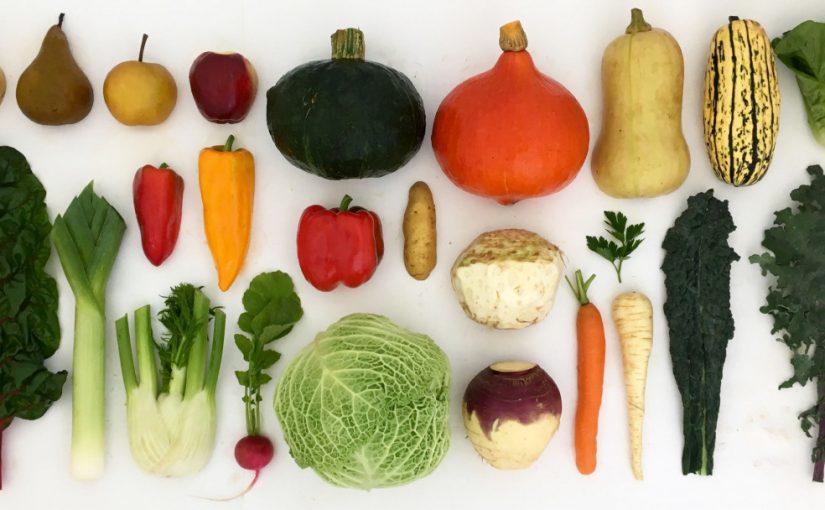
Helsing Junction Farms has been a long standing CSA (Community Supported Agriculture) model, organic farm delivering to the Olympia, Seattle, and Portland area. Their member subscriptions have ranged from 75 to 1300 members over the course of their 28 years running HJF. This year we had around 950-1000 members on 32 acres, which was “scaling back” compared to the 2016 and 2017 seasons. CSA Management entails many things such as; Membership/Customer Relations, Share Management, Online-Store Management, Delivery Route and Drop-Site Management, Harvest Projections, Pack-List Management, meanwhile within these responsibilities lie such important tasks such as field walks at least twice a week, developing a weekly newsletter, and maintaining relations with partner producers such as OlyKraut and Provisions Mushrooms to name a few. Luckily I have a couple great teachers willing to take some time to show Zack and I the ropes.
Farmigo! CSA Management Program
One of the first things they introduced to us is a program called Farmigo. The majority of CSA Management responsibilities can be handled within this program, which makes things a little more convenient. As with anything there are some hardships we face when it comes to using this program whether it be user error or some sort of program glitch. Of course, it’s always the program’s fault according to everyone that uses it! Naturally, I couldn’t agree more. Farmigo offers many services with a subscription to their program.
Farmigo Video Tutorial. Great insights into what that Farmigo provides.
Basically, what I’ve gathered from working with Farmigo is that it’s a program that is used to account and manage the inventory (crops) from harvest to delivery. It also allows the user to manage the weekly CSA boxes (shares). By this, I mean that it lets us assign produce to boxes. In a sense, it’s designing what is to be delivered and therefore harvested to fill the request of what goes into each share. A lot goes into account when deciding what’s going to be in each different type of share we offer. We offer sizes and varieties such as a Large Share, Medium, Mini, Chef, Paleo, Healing, Bulk, Mushroom, Flower, Cheese, Yogurt, Meat, Canning, Juice, Snack, and Fruit share. I would not be surprised if I did, in fact, miss one or two. Anyway, the things that need to be considered are things such as what’s ready in the field, and what each respective share has received in weeks passed. Ideally, with proper planning and the luck of everything working out without any hiccups in production, this would be relatively easy to predict. However, the the best method is always just getting a set of eyes in the field and doing a thorough field walk to determine exactly what’s available and ready to be distributed amongst your members.
At this scale, our administrative personnel of the farm usually takes care of the partner shares like the mushrooms, cheese, yogurt, meat, krauts, and chocolates. Hopefully by next year it will be predominately Zack or myself that are taking on this responsibility with the potential for delegating one of our teammates with this key role.
Our week is usually pretty predictable in regard to knowing that we can expect light harvest somedays, heavy harvest others, and similar with packing shares for delivery. Mondays we usually try to harvest some of our heartier veggies. Only in preparation for the rest of the week. We typically have a smaller delivery of 250-275 shares to be delivered to the Seattle area. Therefore, harvest is relatively easy. Tuesday morning, we come in first thing in the morning and begin to pack boxes with yesterday’s produce. This makes for a pretty hectic morning, but for the most part things go well. It’s nice knowing Zack and I are on the same page when it comes to finding ways to make things more efficient. Anyway, we have to get all the shares packed typically before 830, but 9 at the latest or should I say on a good day. After the delivery truck leaves, we begin harvesting for Wednesday morning “pack-shed.” Again, a similar routine for Thursday morning and Friday, being a day that we don’t have delivery, we can spend in the field. On average, I would say I work around 95 hours every two weeks. My personal best is 127 hours!
This is what a typical week during the CSA season looks like at HJF. This is only in regard to the CSA aspect of the farm. There are many other responsibilities and tasks that are constantly ongoing throughout the season. I’ve come to realize that you can’t plan a damn thing in farming. It’s really just guesswork and compromise. Which is really the fun behind it all. Farming is puzzling all the live long day and compromise when things aren’t perfect.