Week 7 Northwest Chocolate Festival (Saturday, 11/10/18)

All Photos Benjamin Reynolds, 2018

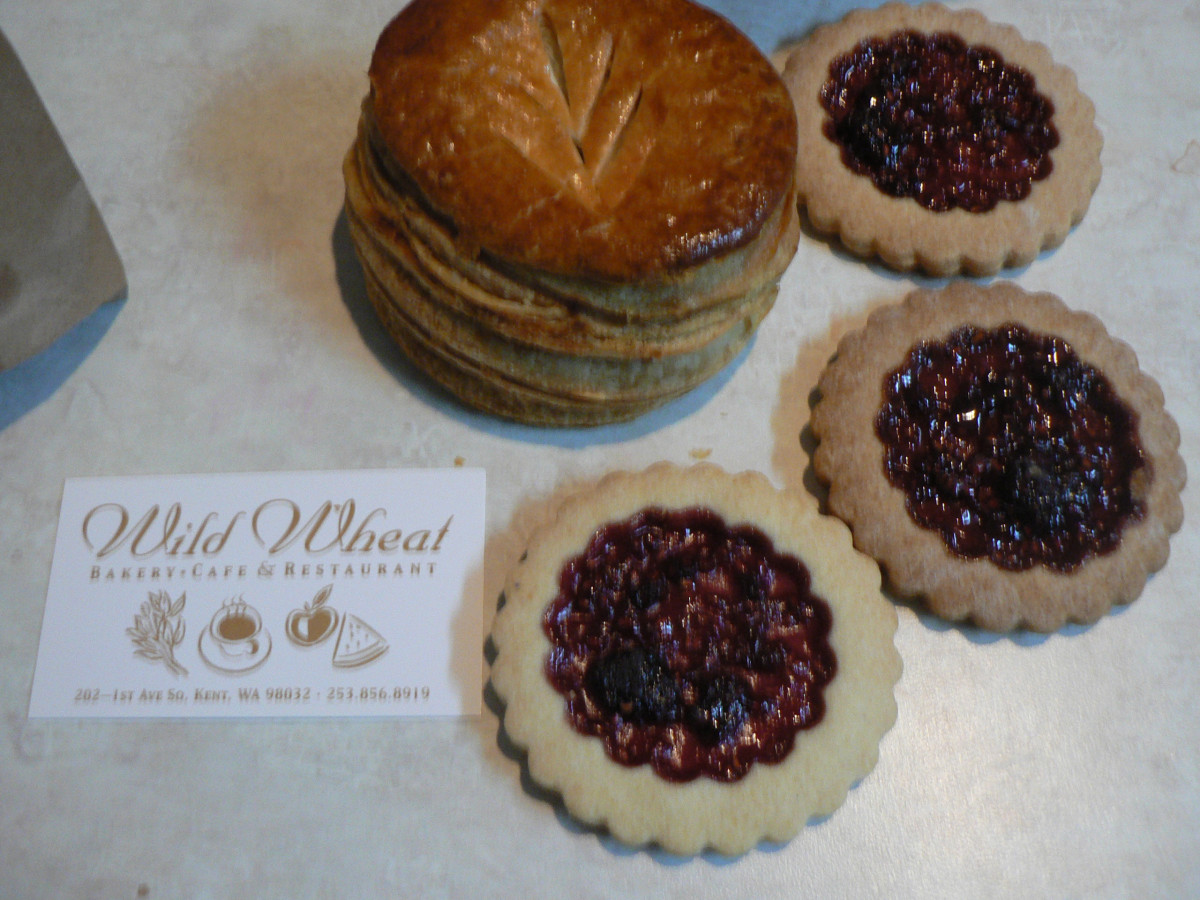
Cameron and I both took a photo here after the journey in. I woke up very early that day and took a quick stop at Wild Wheat Bakery, Cafe & Restaurant in Kent at 7:00 AM for eggs benedict and coffee and snagged some pastry on the way out:
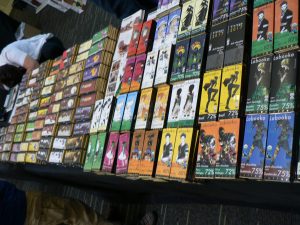
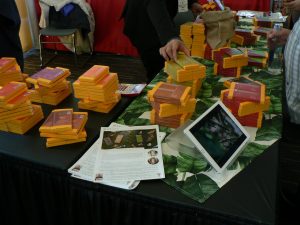
I had reviewed the events in the catalogue, but ended up spending much more time on my initial pre-11:00AM floor crawl than I’d intended.


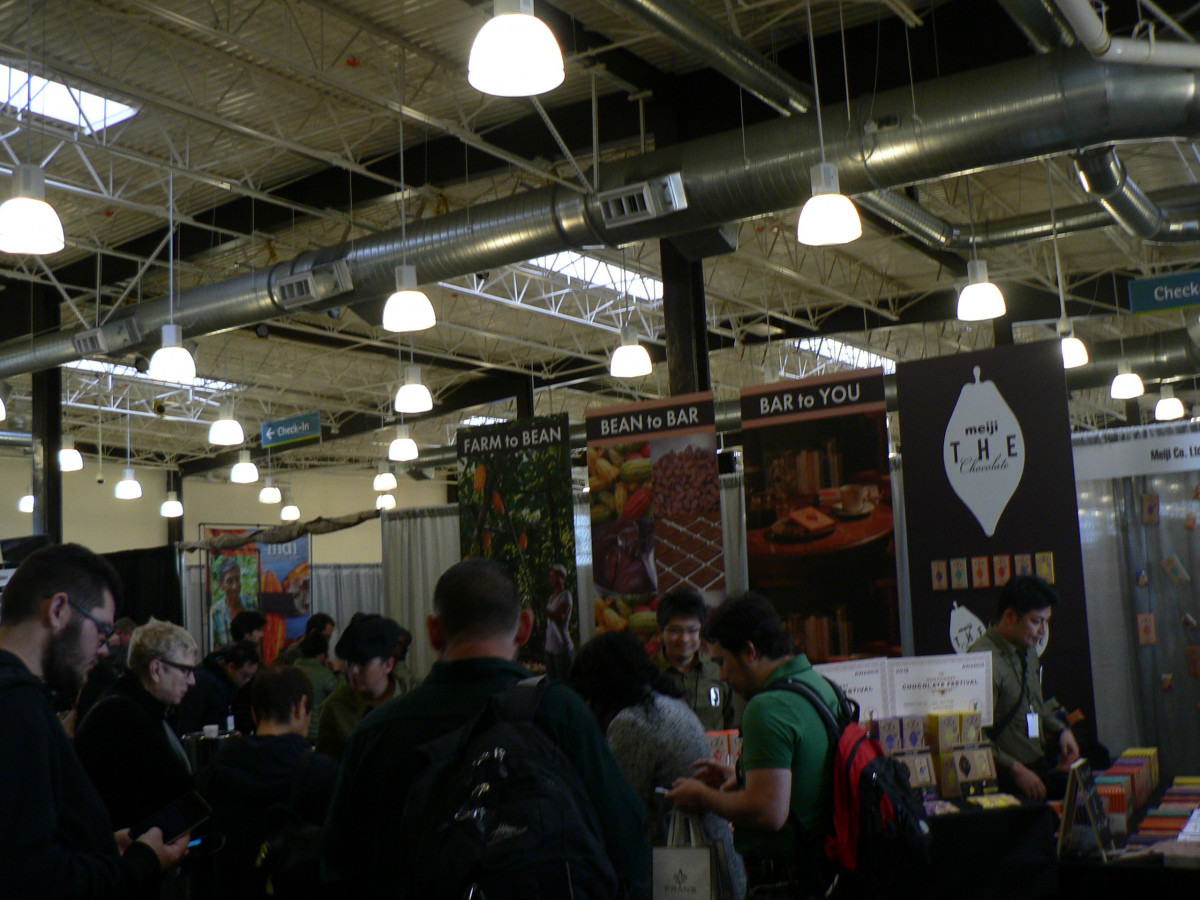
Meiji THE Chocolate was sampling bars and giving them out in return for feedback forms, there was a significant presence of Caribbean and Atlantic Island sourced chocolates, including Cuban and Costa-Rican examples. I think I found the hopped chocolate Dylan had been talking about last year. There were both Brazil and Peru focused bean-to-bar super tables, Thai, Taiwanese, and Dominican Republican grower/&producers and some returning favorites.
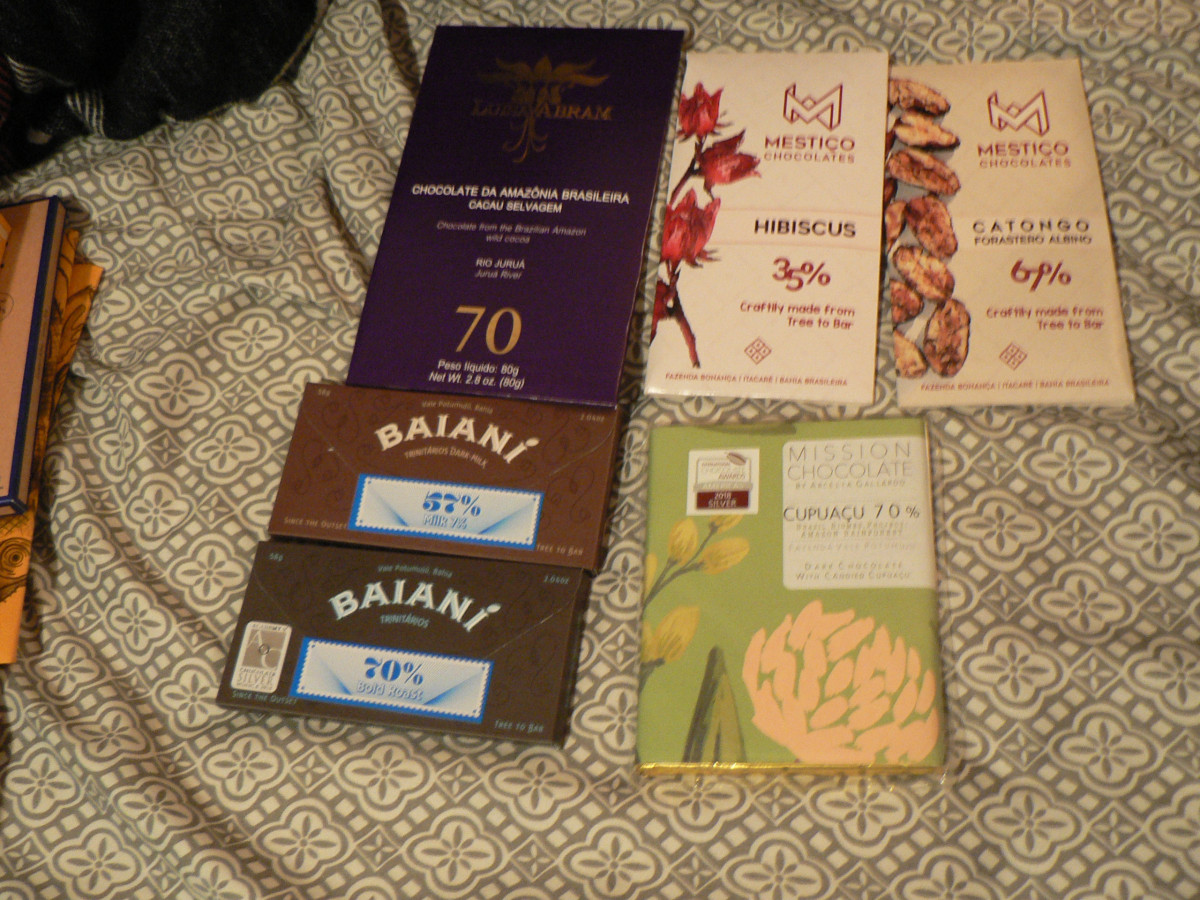
This time, I stuck through Grimm Brothers Farms’ hot sauce tasting and picked up a couple bottles, but not their 40$ eye-dropper superhot hot sauce. The honey producer from this years Tea Festival was here, as well. Standouts for me were the chocolates featured at the sake tasting event (particularly the Baiani and Mestico), the Thai chocolate that underwent a unique fermentation process, the Taiwanese and Dominican grown and produced chocolates, and the things I got to try from the Southwestern US producers, Monsoon Chocolates.

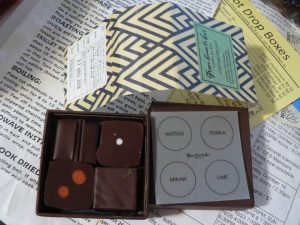
And Grimm Bros.

Much like last time, I went to three events. The first one was a returning talk on herbal aphrodisiacs that partially detailed the herbs and fruits other therapeutic uses, but mostly rested on vague, new-agey descriptions that chased me and several other people off from the room. I went then into the concurrent event wherein the people behind Baiani chocolate detailed their extremely hands off, aging only approach, microbatches, and Brazilian chocolate producers uphill battle with climate, geography and producing quality cacao and chocolate.
After this was the sake pairing, which was a very informative look at and discussion of food and drink pairings in general, a critique of the use of wine in some pairings and a good discussion of acidity. After which, I immediately had to track down the Brazilian bean-to-bar table and Goodnow Farms. And, in talking to others present, we all kind of agreed that presenter Jose Lopez Ganem could carry a documentary tv show.

Week 7 Project Sourdough & the Accidental Theme Of Living Sauces

I found out through discussion the week prior that one of the things that I’d wanted to make was a living sauce, Mole. A sauce made from chocolate and pumpkin seeds. I’ve ended up in hindsight with a “living sauce” in the buttermilk I have from making cultured butter as long as I keep making more butter to replenish it, and, indeed I am finally going to use a key concept brought up in both Sandor Katz’s Art of Fermentation and the Noma Guide to Fermentation, backslopping (wherein I have a previously made living culture and use it as the basis of a new one), to make a third batch. And, indeed, I may well become some kind of weird one-human butter production factory as long as I can keep adding to my buttermilk such that it never spoils and keep making butter.
Another thing that technically falls into this category is sourdough starter. Normally, I would break and set my lines different, but there are only really two ingredients you need to make a sourdough starter. Flour and water. And a seal-able glass jar. Three ingredients.
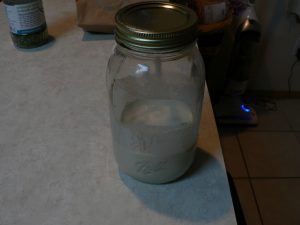
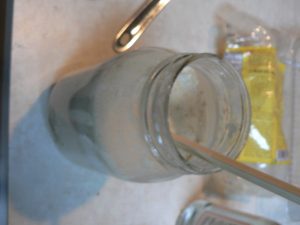
I’m following closely a scaled down version of the methodology detailed in Mouthfeel. Also keeping in mind what Sandor has written on the subject. Basically I combined equal parts flour and water, stirred it up with a stick and sealed it. A little bit more complexly, I used an unbleached rice flour to which I added a bit of my milled barley flour and have been adding the same rice flour rounded out with the unhulled portion of my barley since then. The water added is to be temperature controlled a bit when you add it to match the conditions of the workspace you’re using, my home is a bit cold, so I cut some hot water with cold. Mouthfeel recommends that we wait 3-5 days before we begin the regular process of removing half of the material and adding back in the original proportions to both feed the growing microbes and control the acidity of the internal environment.

All Pictures Benjamin Reynolds, 2018


Round 1

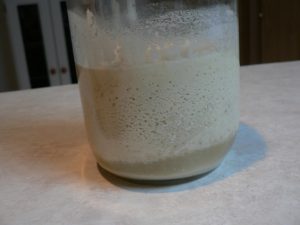
Development before round two, which honestly looks super the same to this. Round three looks a bit different, however:

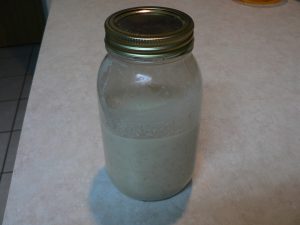
Post choco fest:

oh, and by the way, if you’re working in a colder space like mine, always cover it:

BONUS REVISITATION and preparation:

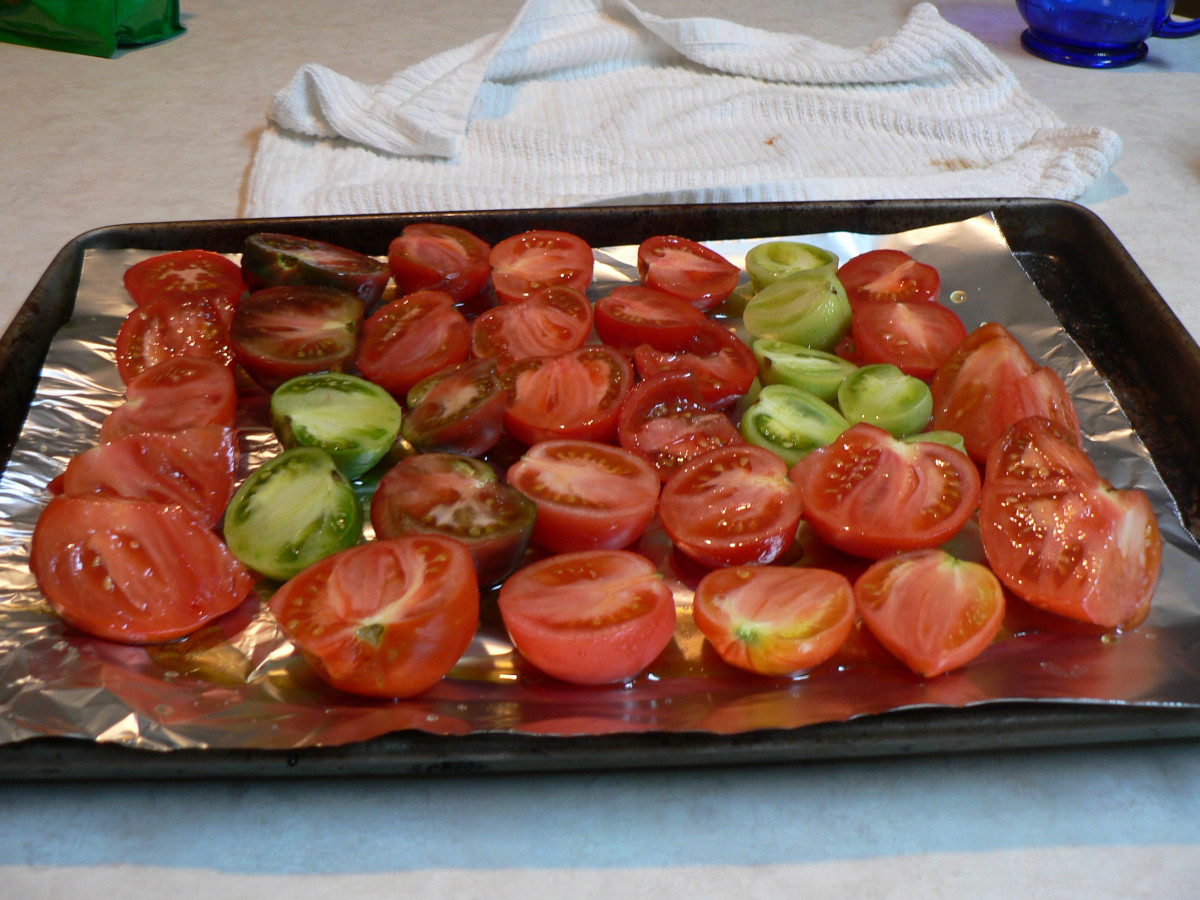
I had a second go at the tomatoes oven drying.

a whole peck a tomatoes courtesy of Evergreen’s Organic Farm
roughly equal amounts of:
avocado oil
olive oil
grapefruit white balsamic vinegar
about 1&1/2 teaspoons Grimm Bros spicy sea salt taken to the mortar and pestle

Preheat oven to 205 degrees Fahrenheit.

Slice the smalls in halves and the larger ones into quarters.

Mix oil, vinegar and salt into a not quite emulsion.

Dress the tomatoes, use all the mixture.

Get interrupted during the process and then someone finishes it off and has some while you’re out at the Northwest Chocolate Festival


Corn for nixtamalizing.

Week 6 Lab: Butter Into Bread

Not quite “water into wine”, but nonetheless, what I did. (I have resolved my camera woes, this time, but I will still be uploading the pictures later this week, as some things have been jumbled about in the present camera’s metadata, nevertheless, I will not need to borrow a camera from another and then still not have images from it a week later)

Ingredients:
1&3/4ths cups Golden Promise Barley Flour
1&3/4ths cups Brown Rice Flour
1 teaspoon salt
1 teaspoon baking soda
2 tablespoons cold butter
1 egg
1&2/3rds cups buttermilk
1 tablespoon partially milled Golden Promise barley

You knead the butter into the dry mixture, but everything else is basically the same as far as making a quickbread goes. Particularly this a barley soda bread. I modified this recipe to fit my needs. it turned out excellent. I managed to have flour milled for me down at Cascadia Home Brew. It took multiple passes, but we managed quite a good bit of powderized material, the remaining roughly milled or otherwise unaffected material works to to form a delightful top crust and future material for my vinegar delusions.
Despite modifying the ingredients, following the the same instructions under the link bore me no issues.
(SODA BREAD PICS IN A STRING HERE)
I replenished my buttermilk what I had used by making more butter with the Flora Danica batch that’d been stewing away with itself for a whole week. For this part of the process,
(A)
we pour and scrape the mixture into our mixing stand’s bowl, attach the sectioned triangular shape and let it rip for about two minutes, much less than if you hadn’t bothered to culture it at all.
(WHOLE BUNCH)
After we get to this point, wherein the solids separate from the liquids, we scoop all the solids up and begin forming them into a single mass as we go with our hands,
(OF)
leaving the buttermilk behind to be strained into the separate container (batch 3 with the backslop technique I’ve been reading about in Sandor Katz and the Noma Guide? Infinite butter?),
(BUTTER MAKIN’)
We then set up a strainer, get a cold tap ready and knead that butter, squishing out the excess milk and reforming it until it runs clear. This part requires both hands and is difficult to take a picture of.
(PICS)
At the end of this process we stop, futilely wash our hands, get out the finishing salt and knead some in an effort to make doubly sure we don’t have any more microorganisms that could lead to a spoil,
(HERE)
Then, still unable to locate the wax paper, we temporarily use wrap it in several layers of paper towel and fridge it, but not before placing our freshly made example next to the one we made last week.
(AND HERE, but just not right now.)

also I got more flour milled at Cascadia Home Brew, but this time it’s Skagit Valley Malting’s Maris Otter-alike and this time I’ll be making a barley sourdough

Week 6: Bread and Butter, the Farmer’s Market, Chestnuts and Nixtamalization

And pumpkin butter. Those last three items are upcoming for my next set of plans. I’ve been buying a lot of nuts along with my other ingredients from the downtown farmer’s market from Burnt Ridge Nursery&Orchards. I additionally also now have 1 of each of the Evergreen Organic Farm’s pumpkins, the winter delight, liberty and kubota, so I believe I should be able to make a well rounded pumpkin butter. And harvest the seeds to make pepitas to make mole. I also found some late season corn which I’ve recently ordered some food grade lime for nixtamalizing. Also, I’m going to try making some malt vinegar. … … and am making a sourdough starter currently, don’t tell anyone
The future aside, I ended up going to brunch at The Mouse Trap, downtown, which has been holding limited space reservation only dinners and brunches ever since they changed owners, earlier this year. I’ll just brazenly copy and paste the details from their newsletter, along with their next planned meal on the 16th:

Sunday Brunch 11/4!

3 courses for $20 does not include tax or gratuity
9am & 11am reservations!
Please call 360-489-0678 to reserve your seat today!

Course 1: Steel cut oatmeal, brazilian wild flower honey, roasted pumpkin and apples
Course 2: Dungeness crab benedict, sous vide duck egg, duck fat hollandaise
Course 3: Poached pear, pecan syrup, Lost Peacock yogurt
Lost Peacock Mac N Chz Tasting 11/16

We are teaming up with Lost Peacock once again, but this time, we are highlighting their cheese with 4 different Mac N Cheese dishes and 6 wines.

$20 in advance and $25 at the door. Call ahead or stop in the shop and get your ticket today! 360-489-0678.

Another upcoming event I’m game for is the Cascadia Grain Festival. Even though these are early bird prices, it’s still a bit expensive at 95$ per entry ticket. I’ll check to see if I can’t volunteer again, this year, it will be especially easy for those of you in the Olympia area to get to, as it’s being held at SPSCC, again.

Also, I made some more butter, used some buttermilk to make some soda bread and some other things, but that’s another post altogether.

Week 5 Revisiting Cultured Butter and set up for round 1 of Bread Lab (All this week’s pictures pending)

Ingredients (Per Batch)

  • 1 quart heavy cream (Smith Brothers)
  • (batch 1) 1 cup yogurt (Tunawerth Creamery)
  • (batch 2) Flora Danica culture
  • finishing salt (after kneading)

I started off relying on the recipe and method I had used back in Gastropoetics. I poured the cream into my bowl and then measured out and mixed in one cup of yogurt. Covered with plastic wrap, let sit for about 5 days. The mixture turned out a satisfying consistency. I put it into a stand mixer, put in on high and let it got way past creme fraiche and into separated solids and buttermilk. Then I kneaded under a cold tap until it ran clear and finished it with some salt. I decided that since I was doing 2 batches and using the interesting ingredient from Mouthfeel, I would not take the pictures of the first batch, since this it just a baseline for me to compare to the Flora Danica butter.

I have started the 2nd batch (this time with the pictures which I still need to recover all of them), following the directions on the package, freezing the culture, putting in the fridge 10 minutes before use and using a glass bottle to roll against the package that the pellets become a fine powder. I put the powder in the bottom, poured the cream in and whisked. Plastic wrapped. Will wait about 7 days, this time.

I didn’t mention this yet, but I drained the buttermilk through a sieve and am planning to maybe use it for my barley bread.

Week 5 Overview (All this week’s pictures pending)

Alright, Koji was not locally available at the market I went to. However, I was able to go to Cascadia Homebrew to both talk bread and mill barley. So, now I have some Golden Promise barley for one of my loafs of bread. I also picked up some rice flour and will head down to the coop and farmer’s market to scour another round for a local flour. Maybe get in touch with Skagit Valley Malting.

I’m presently uncertain if my salsa has taken to fermentation. The brine may have been too effective at microbiological murder. It also turns out that, by my taste, I may have manged to incidentally end up with an “oops, all sweet peppers” blend.

This week, I attended and volunteered for the 38th Evergreen Harvest Festival. I arrived about and hour early and set up tables for the pumpkin carving workshop, and then got the tables and chairs for the event I agreed to volunteer for, a natural building workshop centered on procuring, making and using cob clay. Attendants were invited to take their shoes off and assist in mixing the clay, and then taking a wooden plank on which to sculpt a keepsake.

The set up was light and the workshop was occurring at a later time than I’d though, so I took the festival in. I should have brought and empty bottle for the all day cider press. Situated along with the farm run press was a local distiller, Cascadia Terroir, who deal in essential oils, perfumes and so on, the had a workshop from 12:00 to 1:30 where they brought out a still to make some lavender oil. Apart from this, there was a Tumwater school bake sale, Tamale Fusion and some live music. After the workshop that I was volunteering for ended, there was an oyster shucking competition. Can’t forget that there was also a mycological society present, they were running a combination booksellers and organic mushroom farming stand where one could buy bags of mulch and seed fungus.