https://docs.google.com/presentation/d/1rV2GHzQnsmnjBQSj57XOcPc_RRp7xmSBUWOs8FJkL1M/edit?usp=sharing
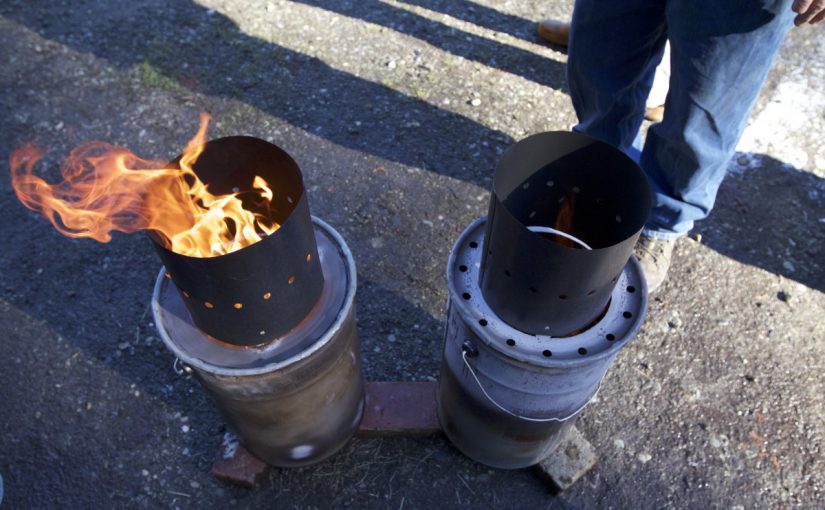
Building a TLUD
Well it was truly amazing to have the opportunity to go up to Sequim to visit our good friend Norman Baker. Norman is an exceptionally friendly guy that is savvy in the ways of biochar. Not only does he know a thing or two about biochar, but he is even crafting some of the cleanest burning pyrolysis units using metal 55-gallon drums. Norman has been working with biochar for close to ten years only after running an incredibly nursery specializing in Day Lilies, but also attaining his Ph.D. in entomology. Currently he is working on his 17th version of a TLUD. Each one better than the last. Norman and his wife Peggy invited Avi, Arden and I to stay
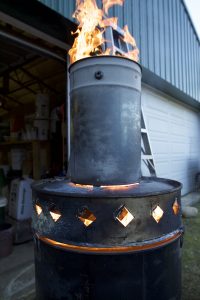
with him for a weekend up in Sequim while he taught us how to make his most current model of TLUD so we can produce biochar to commence our thorough analysis of certain feedstocks. Not only do we get a clean burning unit, but Norman can still collect data relative to his designs and continue to share information with his many contacts.
Biochar and the SEM
In the upcoming future, my teammates and I will be working with the Scanning Electron Microscope or SEM. We are especially excited about this because we can take a sample of biochar and be able to analyze certain properties under extreme magnification. The beauty of the SEM is that it has the capacity to magnify upwards to 500,000x. Our lab technician mentioned that once you get beyond a certain point, the picture tends to get a little grainy and sometimes difficult to handle. I only really plan on going as far as 200,000x magnification but I’m certain I’ll play around with more and if any image presents itself as being worthy of a photo, rest assured I will snap it! SEMs are pretty amazing in the way that they are able to examine a sample.
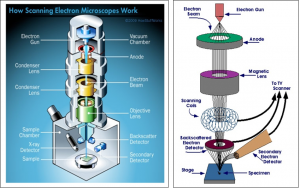
Basically, the scanning electron microscope fires a beam of electrons through a filament down at the sample you have staged. The electrons are kept in alignment through a series of alignment coils and condenser lenses which allow for a more concentrated beam making contact with the sample. As the electrons make contact with the sample, they begin to replace electrons from the atoms of the sample, itself. As these electrons from the sample are “deflected,” an electron detector collects them and begins to translate that as an image displayed on a computer screen. Simple enough in a sense.
Continue reading Biochar and the SEM
Chimacum Farm Visits
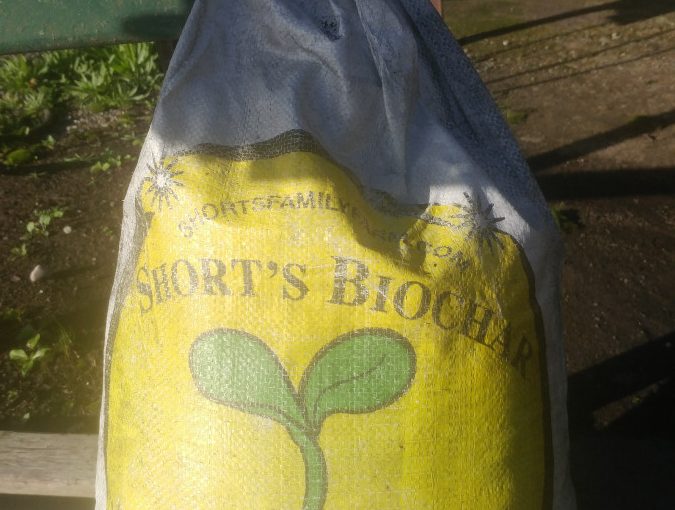
Over the weekend I was a great opportunity to do some farm tours up in the Chimacum Valley in Washington and it was absolutely beautiful. Not only did I get some phenomenal insights into biochar and biochar production but I also had the pleasure of being introduced to some of the greatest people. I was fortunate enough to meet with four different people, Lowell Dietz who is a mushroom producer and incorporates biochar into his substrates, Francesco Tortorici who assists many different farms in biochar application and production, Judith Rubin who utilizes biochar in her local community garden and chicken coops, and Roger Short who produces “magical soil” which some blends incorporate biochar. From all of these people, I learned valuable information and was able to hear first hand their experience with biochar. What made this so unique, though, was that each person utilized biochar in a different manner. Lowell used his biochar in his raised beds, but he also incorporates it into his mushroom substrates. Not only that, but he primes his biochar with the leachate he produces from his vermi-composting system. He also used his TLUD (Top-Lit Up Draft) to pasteurize his substrates. So as he was producing his biochar, he was preparing himself for his mushroom operation therefore being much more efficient and practical. *Pictures soon to come of his entire setup* Here is a photo of him next to his worm-bins. His
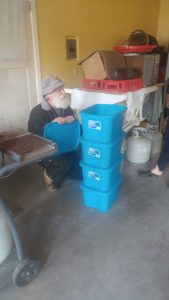
system was very low maintenance and it proved to be very efficient. He was an incredibly insightful fella. He even made a concrete molding that housed his TLUD to act as a windbreak and control his primary air intakes within his system. It was amazing. Following that up, we went to Judith’s community garden to see exactly how she incorporates biochar into her system. Her and Francesco work hand-in-hand with this project. They incorporate biochar into their chicken coops which primes their biochar at which point they add it into their gardens. They also did a lot of “citizen science” as they called it. They basically ran trials but mostly went by appearance rather than taking in-depth notes. Which might me more my style. They were showing great results however. Firstly, their chicken coops didn’t smell at all due to the biochar. It was neutralizing the odor and it would maintain that for a long time. Once it did begin to smell, they would simply remove the bedding and throw it into their garden.
ETHOS Conference
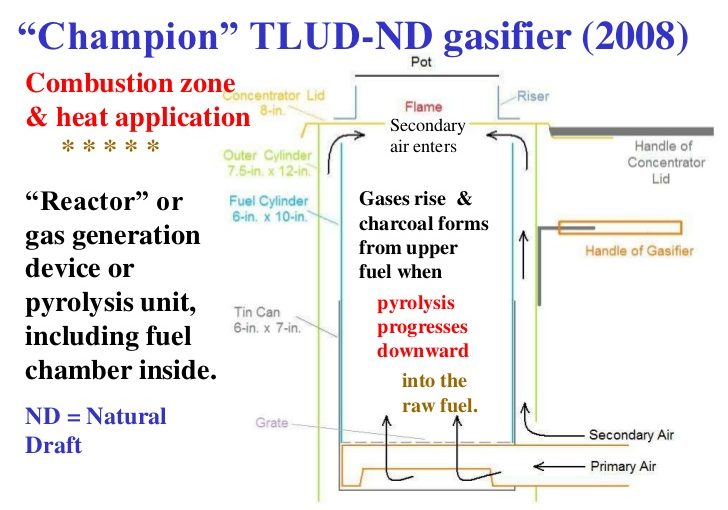
During the weekend of January 26th-28th a couple of colleagues and I went to a conference in Kirkland, Washington to discuss pyrolysis unit designs for the most efficient, cleanest model to produce biochar. Little did I know that we would be introduced to a lot more than that. ETHOS is a conference that brings together researchers, humanitarian organizations, as well as farmers to have an open, constructive discussion on methods to fine tune the many types of cook stoves and pyrolysis units. ETHOS stands for Engineers in Technical and Humanitarian Opportunities of Service. Each year they hold conferences and relay some of the newest information pertaining to public health, efficiency, and social impacts in relation to cook stove production and distribution.
Not to mention, the people that I was fortunate enough to meet
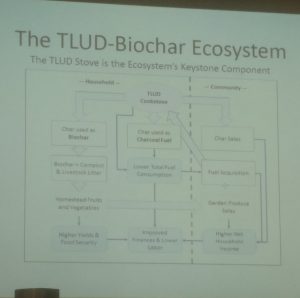
were of the highest caliber. It was truly inspiring to meet so many others that were there simply to share information and help their colleagues in succeeding. Almost immediately the group and I were welcomed with open arms, with each interaction leading into another gracious welcoming. From Friday until Sunday, we sat in on many different speakers each with incredibly helpful information that will help our Evergreen biochar group better develop methods of production.
Setting The Stage
We’ve been fortunate this week to have a couple of days without rain to really take care of some of our preparations for our scale of biochar production. Working with the biochar group, we were able to organize our production area. It’s nice to get this task off the mind so now we can continue our research and collect our

feedstock all whilst having a perfect staging area to start making our recipes! We also threw together a little compost pile, as you can see in the back-right of this photo. Our plan is to even throw some biochar into the compost to see if we can’t passively charge it with the decomposing materials.
The idea is to use these pallets to store our certain feedstocks and allow to dry. Once we are able to, we are going to cover our feedstocks in a clear plastic to allow them to dry even faster which will allow us to have a more efficient product. Water in your feedstock can greatly alter the outcome so we are aiming for 15%-30% water within the feedstock to allow for the greatest amount of consistency.
Biocharmed Beginnings
This embarks the first post of many throughout the quarter. My focus is biochar and the effects it has on soil, soil biota, and vegetation. Not only can biochar have an effect on these aspects of agriculture, but it can also help to mitigate climate change. Attached are just a few pages of notes from what may soon be considered a novel of information. Luckily I have a great opportunity to work with some
great friends and faculty on the matter which I’m sure will help navigate the mountain of information we plan to summit. My background in biochar is very limited, for now. As you can see from the first few pages of notes they pertain to the basic understandings of what biochar is and how exactly it can change soil positively or negatively. The biochar group collectively is working to better understand the characteristics of biochar and determine under what parameters do we produce the safest, most effective soil amendment. To all my other classmates, I hope you enjoy following along and as always, input is greatly appreciated.