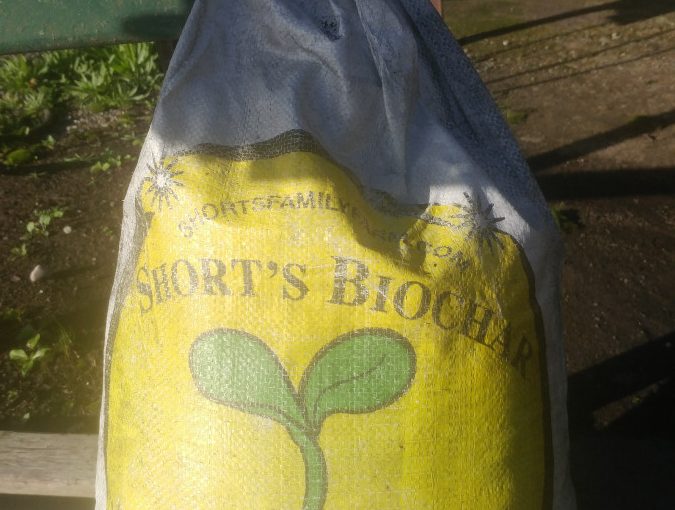
Over the weekend I was a great opportunity to do some farm tours up in the Chimacum Valley in Washington and it was absolutely beautiful. Not only did I get some phenomenal insights into biochar and biochar production but I also had the pleasure of being introduced to some of the greatest people. I was fortunate enough to meet with four different people, Lowell Dietz who is a mushroom producer and incorporates biochar into his substrates, Francesco Tortorici who assists many different farms in biochar application and production, Judith Rubin who utilizes biochar in her local community garden and chicken coops, and Roger Short who produces “magical soil” which some blends incorporate biochar. From all of these people, I learned valuable information and was able to hear first hand their experience with biochar. What made this so unique, though, was that each person utilized biochar in a different manner. Lowell used his biochar in his raised beds, but he also incorporates it into his mushroom substrates. Not only that, but he primes his biochar with the leachate he produces from his vermi-composting system. He also used his TLUD (Top-Lit Up Draft) to pasteurize his substrates. So as he was producing his biochar, he was preparing himself for his mushroom operation therefore being much more efficient and practical. *Pictures soon to come of his entire setup* Here is a photo of him next to his worm-bins. His
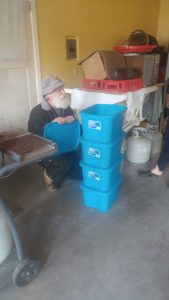
system was very low maintenance and it proved to be very efficient. He was an incredibly insightful fella. He even made a concrete molding that housed his TLUD to act as a windbreak and control his primary air intakes within his system. It was amazing. Following that up, we went to Judith’s community garden to see exactly how she incorporates biochar into her system. Her and Francesco work hand-in-hand with this project. They incorporate biochar into their chicken coops which primes their biochar at which point they add it into their gardens. They also did a lot of “citizen science” as they called it. They basically ran trials but mostly went by appearance rather than taking in-depth notes. Which might me more my style. They were showing great results however. Firstly, their chicken coops didn’t smell at all due to the biochar. It was neutralizing the odor and it would maintain that for a long time. Once it did begin to smell, they would simply remove the bedding and throw it into their garden.
Next we went to Finn River Cidery where they actually produce their biochar using a Flame Curtain Kiln. This isn’t nearly as efficient or clean but it does get the job done. They are able to use all of their blueberry waste as their feedstock and incorporate it right back into their production system. Through their production they were producing a lot of torrified wood, which is basically incomplete biochar. This was due to the moisture content in their feedstock so it wasn’t able to pyrolize entirely. This can cause problems because the wood would tie up a lot of nitrogen as it had to continue to decompose. The thing I did like about this method was that they could pyrolize more biochar per batch than a TLUD.