A few days ago i noticed a few of the lambs had dirtier bums than usual so Lyndal came out during feeding to check on them to realize two of them had flystrike. This happens when sheep have wet butts which attracts flies which then lay eggs in the poo. When the eggs hatch, maggots are born which eat into the skin and if unchecked can eat the sheep alive, inside out. We ended up shearing the dirty bits of wool off, picking all of the maggots off, and then spraying iodine all over the affected areas to kill any lasting maggots or bacteria. Luckily we caught them before the maggots buried into the skin so now the lammies are feeling a lot better. The process of dealing with flystrike as Lyndal put it is “the worst thing I’ll ever have to do here” so I guess it can only get better from here.
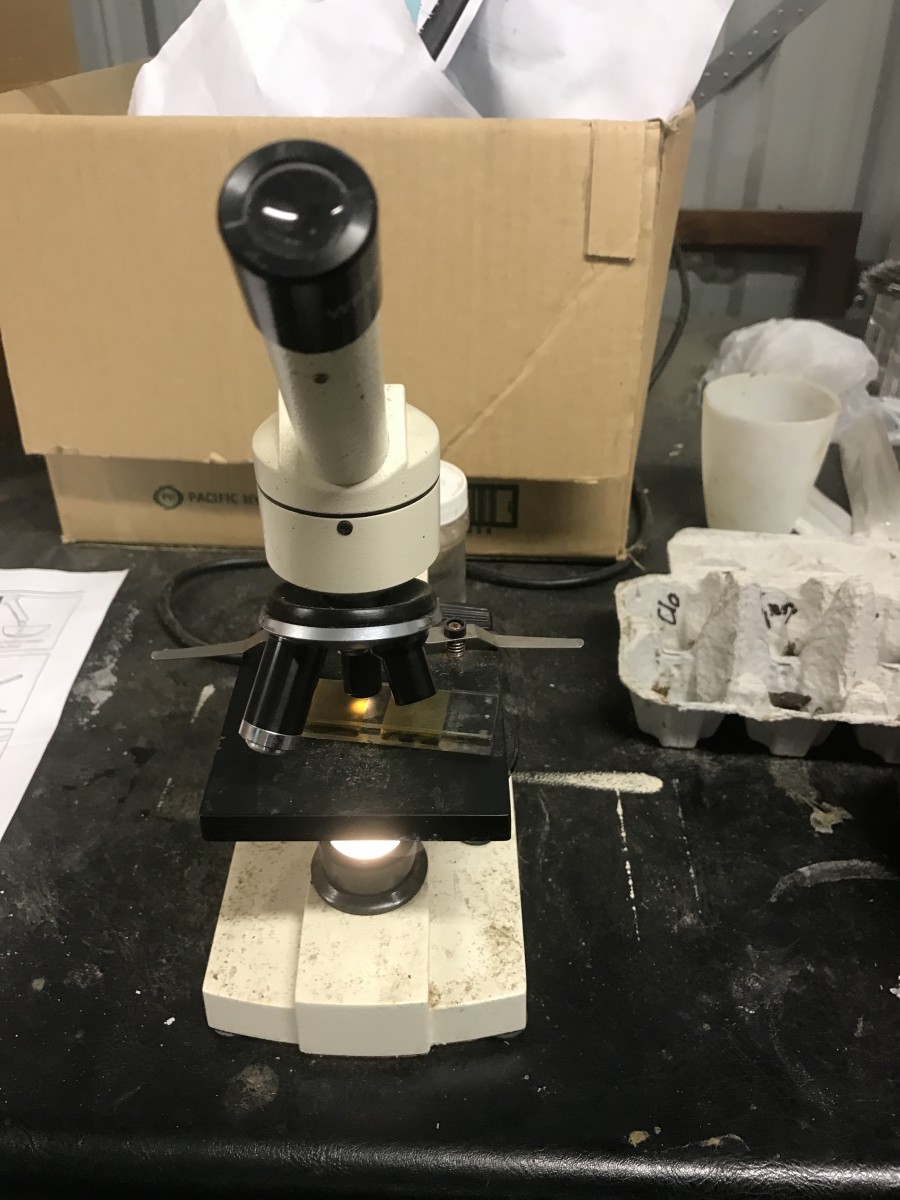
The past couple days I noticed Picodon, one of the milking goats, had lost a significant amount of weight so today I collected some of her feces and did a fecal egg count and found a bunch of worm eggs. This unfortunately means we have to drench her with a wormer and that we can’t use her milk for 35 days until the chemicals are out of her system. She was one of the last two who we were still collecting milk from and now we’re down to one which is a huge bummer.
This morning, we decided to process some chickens who we caught previously eating eggs. This was my first time ever participating in butchering any animal, but I think it’s definitely important to see what the process is like if you decide to eat meat. (GRAPHIC INFO AND PHOTOS AHEAD) We started by hanging them upside down by their feet and then took the heads off in one fast slice with a very sharp knife. Since the spinal cord has been severed, they thrash around which is why it’s so important to tie them tight so the blood doesn’t spatter everywhere. Then, you dunk the body in 65 degree C water to loosen the follicles so it’s easy to pluck the feathers. After the feathers are gone, the actual butchering process starts. Lyndal gave me a brief anatomy lesson as we gutted them and we actually found two whole fully formed eggs inside the girls. We saved the hearts, livers, and gizzards to cook and fed the rest of the intestines and guts to the pigs and dog and cat. Lyndal decided to boil one of the chickens, and I cleaned and froze the other two. The hearts are best eaten fresh, and it is an ancient tradition to consume the heart of an animal you’ve killed to let the spirit carry on into yourself. Lyndal made a heart salad with leek and port wine and cooked up the eggs we found inside. Overall it was a very intense experience but I definitely learned a ton by participating.
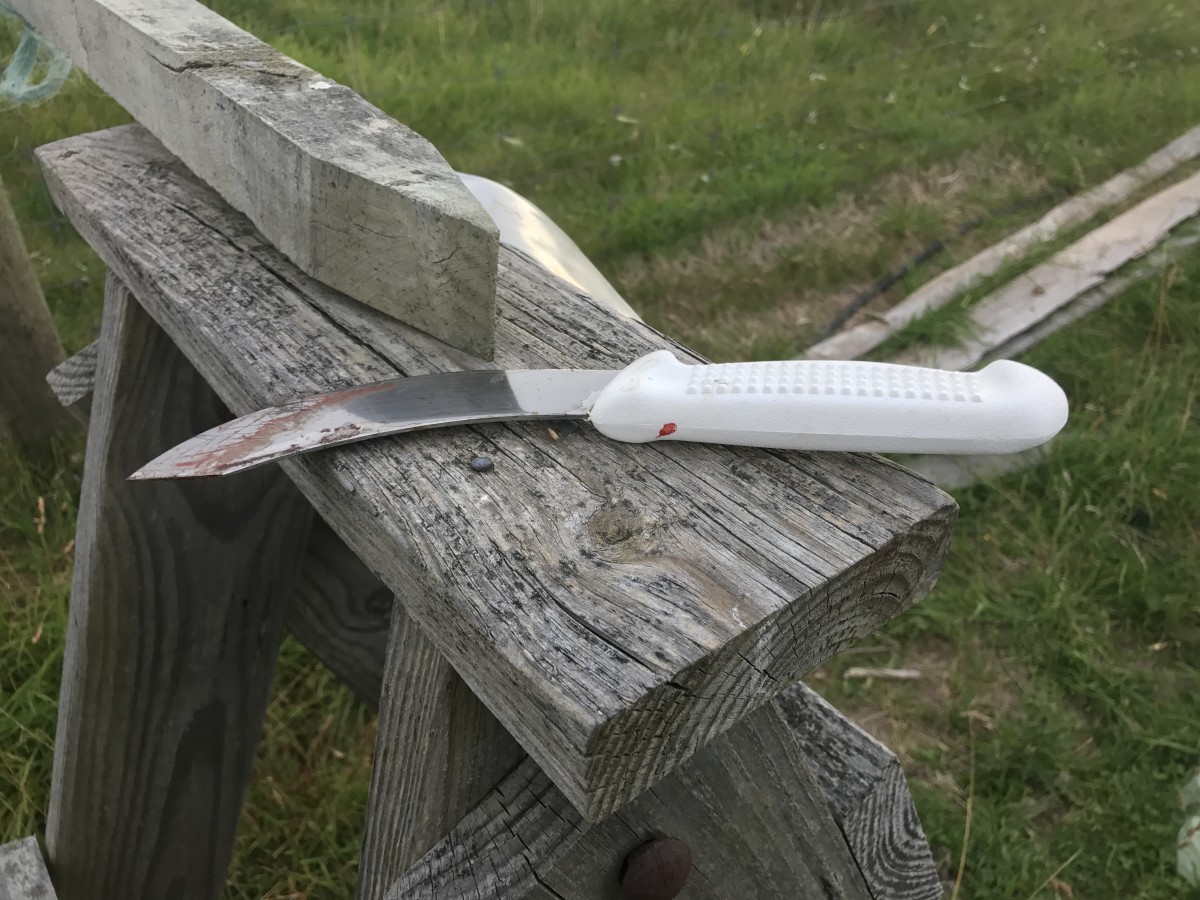
I’m not going to post gory photos online but this is the knife we used to slice the heads off
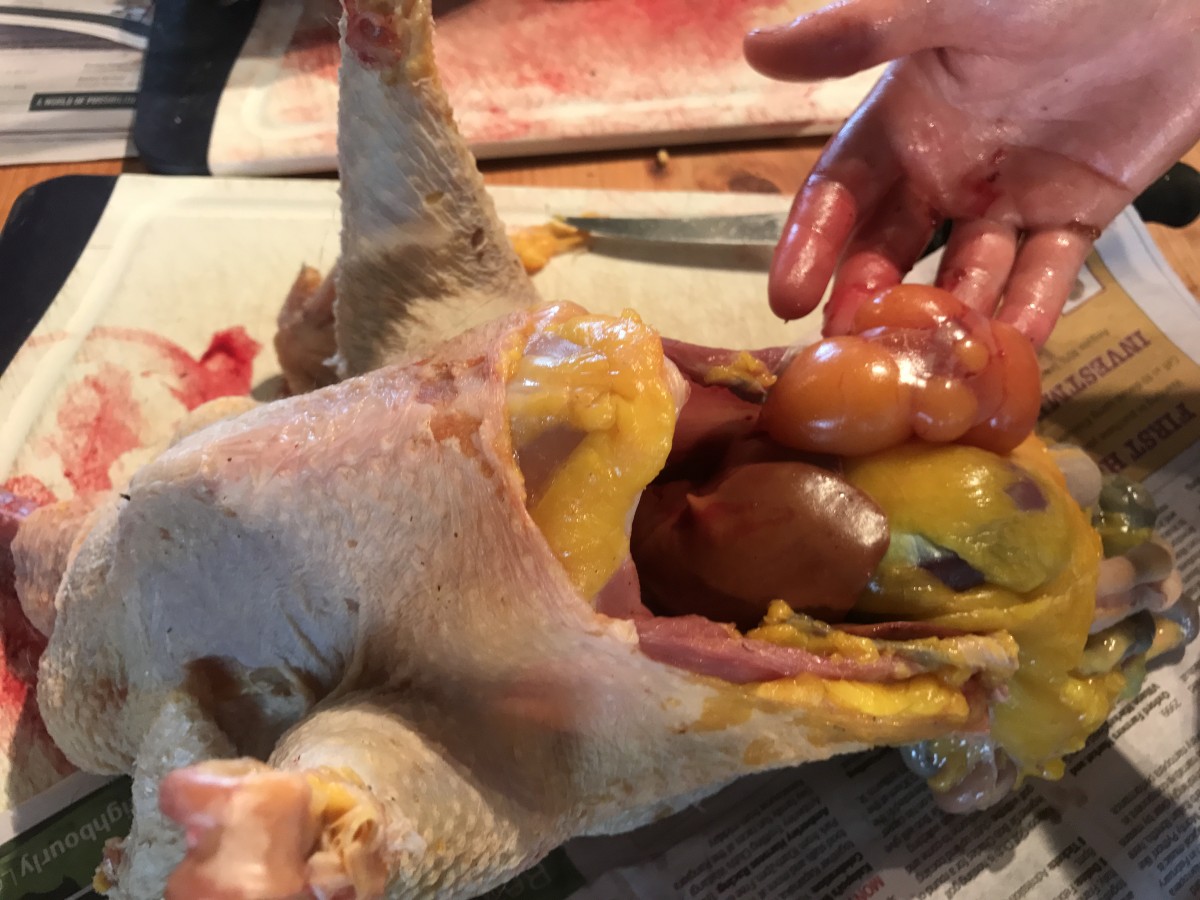
egg yolks inside that hadn’t fully formed into eggs
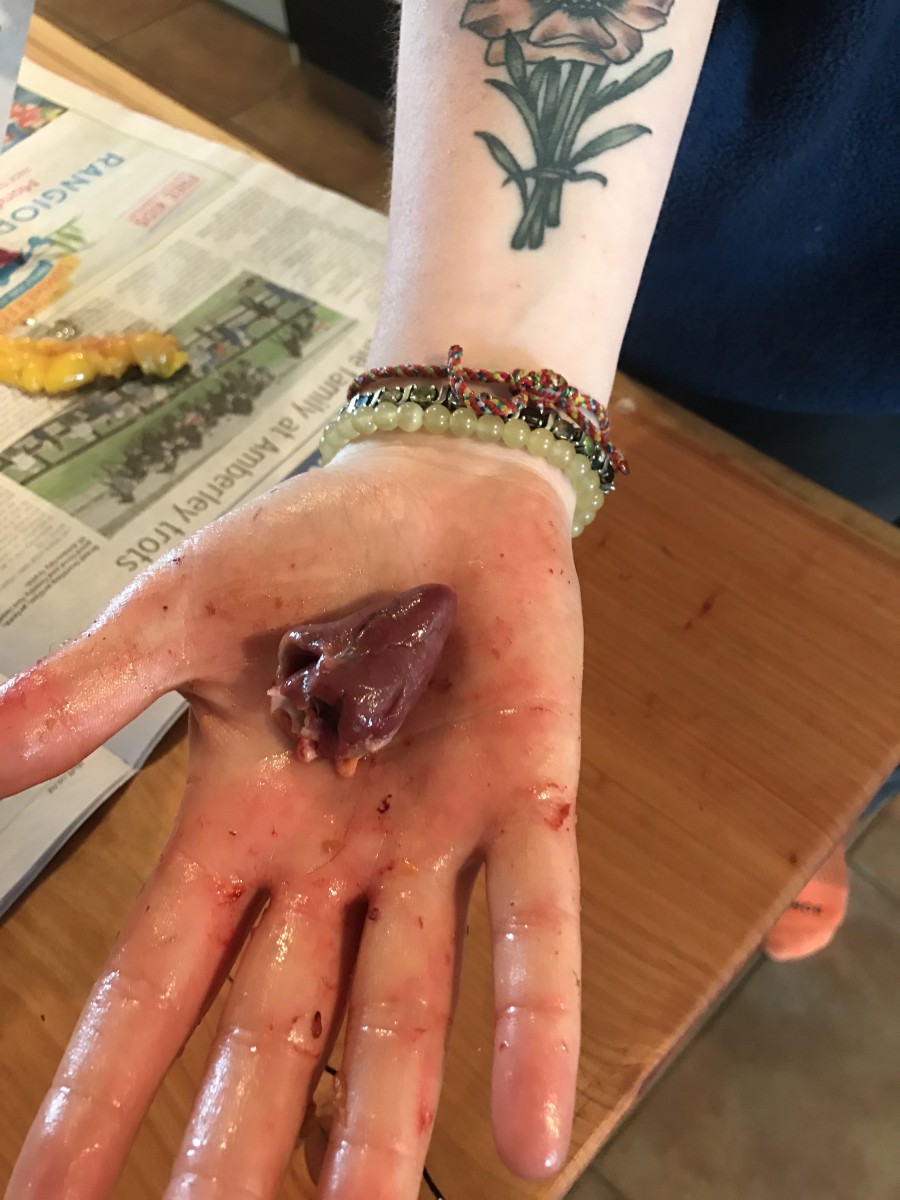
the heart
Before killing the chicken, I thanked it for its life and took a brief moment to acknowledge what was about to happen. It is definitely not easy to take a life, but when thinking about how farmed chickens are managed and treated in death it makes me feel a lot better to kill and process the meat that I eat this way, rather than in a dirty, disrespectful fashion. It is a really powerful thing to watch but in using every usable part of its body and respectfully disposing of what we didn’t use means that the chicken will live on and will have not died in vain or for no reason.
Leave a Reply