This week, we organized the wash station.
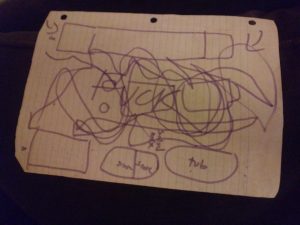
Its design at the beginning of the program did not allow for cohesive flow. Students entered the wash station without a designated place to wash their freshly harvested produce. They would work on whichever surface was available, and most of the time did not know what to do with their produce – having to ask multiple questions and take many unnecessary steps. As the spaghetti diagram shows, this was not lean:
In order to make the flow of the wash station more lean, we needed a system based on each crop’s journey from field to market. We came up with this design:
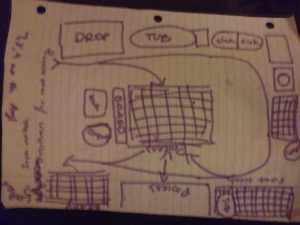
Then we physically moved everything around to achieve the desired flow.
First, we moved the container washing station outside of the produce washing station. Prior to this move, containers were being washed at the very start of the flow line, and the bins were taking up the entire left side of the wash station, leaving very little room for produce processing. By moving the container washing station out of the wash station, we freed up a lot of room to be able to work with:
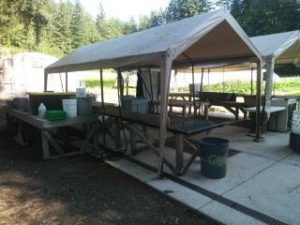
We designated the first table in the flow to be “produce drop off.” This is the students’ first stop when they come back from the field. From here they decide where to go next. Salad mix, for example, goes through the iron tub, the bubbler, the spinner, and the dryer before it is bagged – so we placed those stations in the appropriate order:
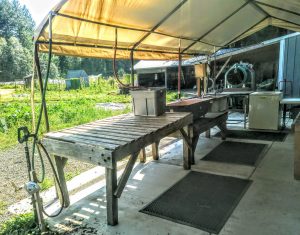
Other greens, like lettuce and kale, are dunked in a dunk tub, then placed on the drying table under the fan before being packaged and sent to the cooler:
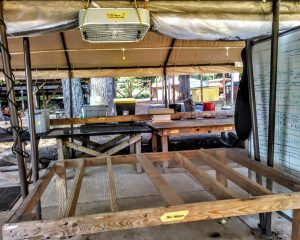
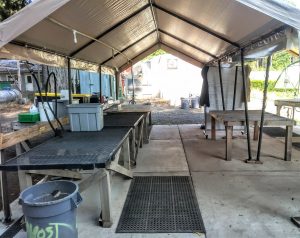
Root vegetables, like carrots and beets, are sprayed off, then dunked and sorted at the root washing section of the wash station. The following table is for sorting the 1st’s (Market) from the 2nd’s (Food Bank) and the 3rd’s (Students). Marked tubs for the 2nd’s and 3rd’s should be placed at this table at the beginning of harvest shift. The final table is the weigh and package table. The scales live there, to be used to weigh things like cucumbers and squash before they are sent off to the cooler. This is also where the harvest tools live during harvest (rubberbands, twist ties, harvest knives, tape, markers, clean bins for market). This is the last stop on the way to the cooler:
Leave a Reply