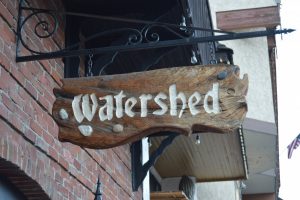
Although our original plan was to eat at the King Fisher Restaurant at the Sleeping Lady Resort, which boasted their own organic garden, we were skeptical about a farm-to-table buffet. (side note: how is a buffet even sustainable…wouldn’t it generate a lot of food waste?) So we opted to eat at WaterShed Café in downtown Leavenworth instead. I was intrigued by their unique proteins and how they seemed to be sourced locally mostly from the Pacific Northwest, which was often not the case for some of the farm-to-table restaurants I had visited in Denver (in one case my fish had come from Iceland).
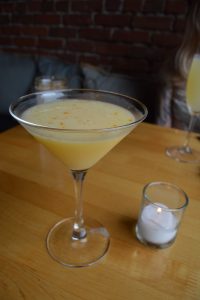
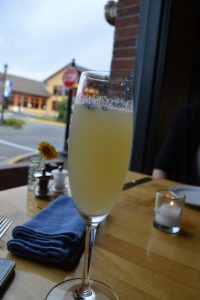
So once our reservation time rolled around, we eagerly walked a few minutes across town and were sat at a table by the window. We decided that the cocktail menu looked interesting enough to try and ordered our respective drinks. He ordered the Dreamsicle (what our server called the equivalent of a melted creamsicle popsicle); made with Bacardi rum, orange juice, local lavender simple cream, and soda. While I ordered the Wildflower 75 with gin, brut, WA local honey, and lemon juice. The honey aroma and taste was the most evident in those first few sips, yet slowly faded away the more I drank. The Wildflower 75 was my first cocktail made with honey and would certainly not be my last, as I intend to add honey into the ingredient rotation the next time I play bartender for my friends.
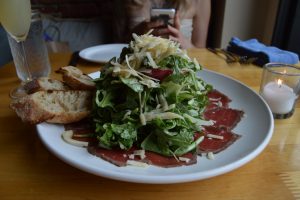
As we debated appetizers and googled what ‘carpaccio’ was, I selfishly wanted to order a bowl of the bison tortilla soup to myself. But I took a gamble and ordered an appetizer for the two of us, that was outside of my culinary comfort zone and was thankfully rewarded. The Oregon Bison Carpaccio was plated with baby arugula, radish, shaved fennel, champagne vinaigrette, and anjou crostini. For those of you who don’t know what carpaccio is, it is thinly sliced raw meat or fish. The bison was so savory, I felt like it could melt in my mouth and the radishes were the most crisp and fresh I had ever had. As I cherished each thin slice of carpaccio, I wondered how bison were raised and made a mental note to research that later on.
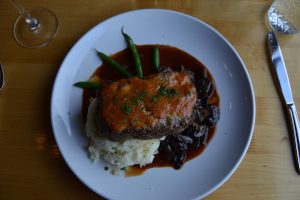
Our entrees arrived at the perfect time and I excitedly dug into my partner’s plate. Maybe this seems a bit rude to just dig into his food, but the truth was I was honestly more excited for his entree than mine. It is rare to see meatloaf at a more upscale establishment, so you already know it’s going to be delicious…not to mention all the Yelp reviews that openly praise the meatloaf online. The meat comes from Double R Ranch; the same place that Local 360 sources much of their beef. The meatloaf is served with a cabernet herb gravy, crimini mushrooms, and garlic whipped mashed potatoes. I swirled a mushroom around in the gravy and popped it in my mouth. Complete umami bliss, just as expected. Tender and moist, the meatloaf was utter perfection. After deeming my partner’s entree a success, I decided to move on to my own plate.
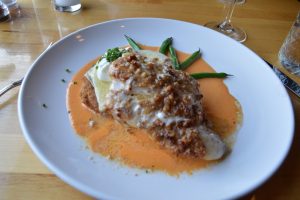
I went with the PNW Wild Ling Cod encrusted with walnut butter and served with a potato croquette topped with Tillamook cheddar, sour cream, and chives. The sauce was a tomato sherry cream and green beans were served on the side. The cod was light and delicate, providing the perfect base for the walnut butter and sauce. After I hit the halfway point in my dish, I came to realize I had ordered the plate with the most dairy in it. My plate was drowning in dairy; from the butter, to the cheese, to the cream based sauce…it was too much. I slowly sank into a food coma and declined dessert for the first time in my life. I suppose I should have been less surprised with the over the top use of dairy, the potatoes for every side, and large portions of protein…I was in a Bavarian town, so it only made sense to be served food in a Bavarian style. I suppose I just didn’t expect it from a farm-to-table restaurant. This situation reminded me of The Third Plate by Dan Barber, because this restaurant was still stuck on the metaphorical first plate due to their large protein sizes and smaller amounts of vegetables. Seems weird to complain about, but I wanted less meat and more local vegetables to be showcased on my plate.
I suppose each farm-to-table restaurant is different in the sense of how they view sustainability; do they look long term into the distant future or are they only worried about the now? If they as a restaurant care about the future, then it would be best to downsize and downplay proteins and put more of the focus on plant based foods. Surely there can be a way to do that without sacrificing the Bavarian cultural influence that they try to incorporate into the food.