Erik Drews
SOSComAlt
Weekly project post
Beer Week 7
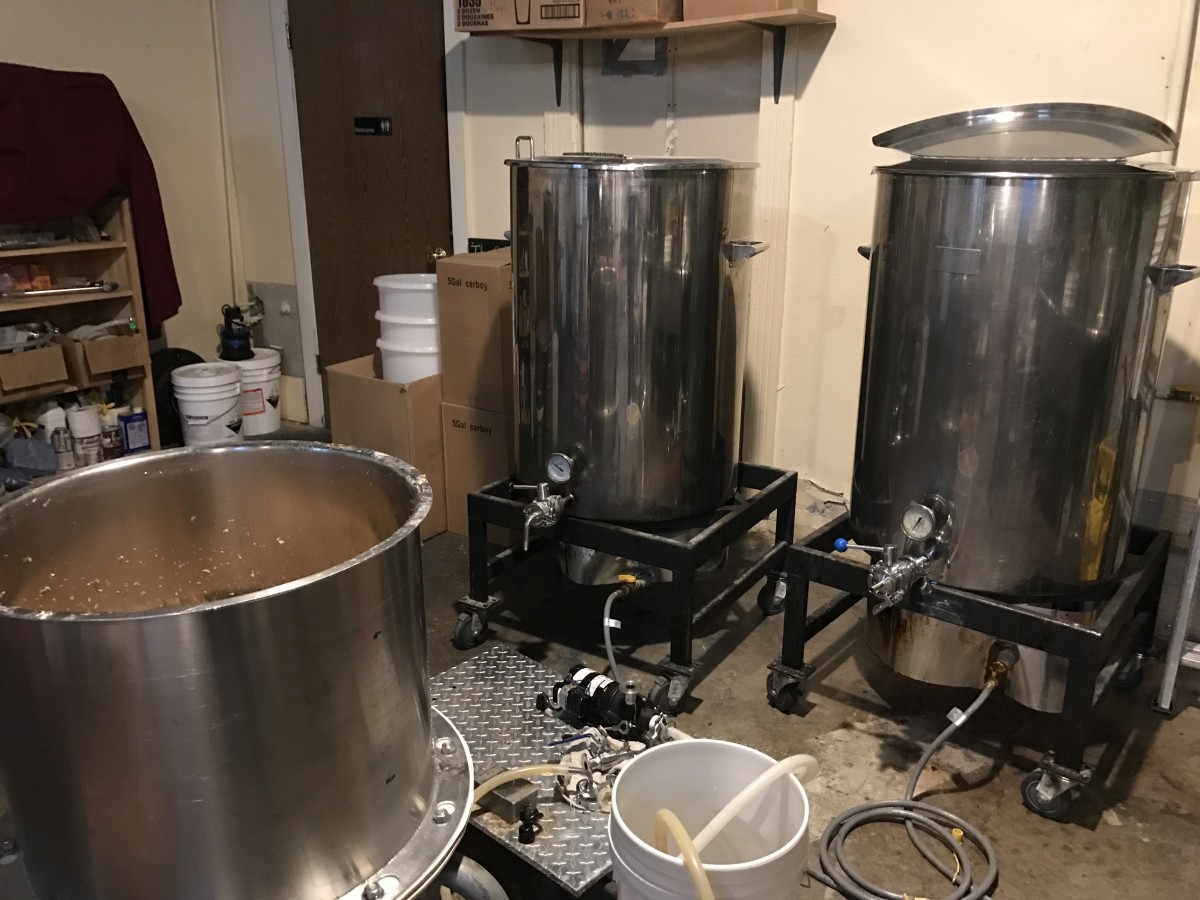
Mash Tun, and Boil kettles connected by pumps at Cascadia Homebrew
This week is the first time that I have gone to Cascadia Homebrew on Wednesday to help brew beer on a larger scale with my subcontractor, Chris Emerson. I received a vast amount of information regarding the use of malts, hops, yeast, and water. Instead of having my recipe like my past beer updates I chose to

Mash Tun during fly sparge at Cascadia Homebrew
focus more on the new information that I learned. For the mash, I generally use 1-2 quarts per pound of grain. Chris however uses 1.4 quarts to each pound of grain, if using grains other than barley, such as corn or oats, more water is necessary to allow for more space between the grains in the mash tun. This helps reduce the chance of encountering a stuck sparge. This 1.4 qt to 1 lb. ratio requires the heat strike to be about 10 degrees hotter than the target resting temperature. When using a lower water to grain ratio, a higher heat strike temperature is required. 1 qt per 1 lb. of grain requires the heat strike to be about 15 degrees higher than the target resting temperature.
Vocab
- Diastase- an enzyme group that transforms starch into maltose.
- Diastatic power- measurement of a malted grain’s enzymatic content.
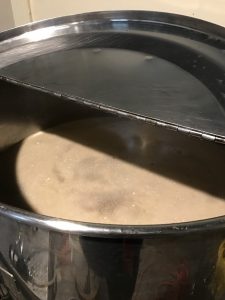
Heat Break in boil kettle at Cascadia Homebrew
- Lovibond- a scale for measuring the color of beer.
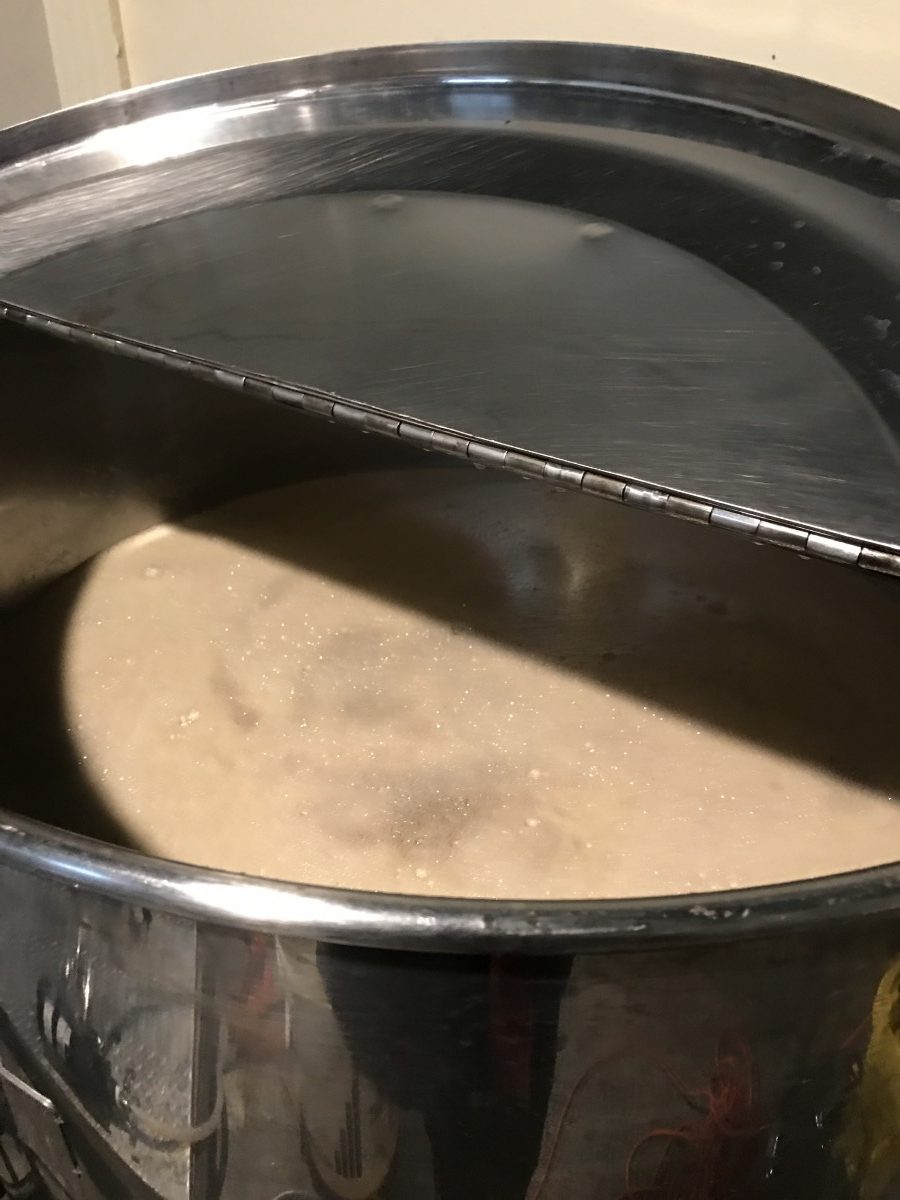
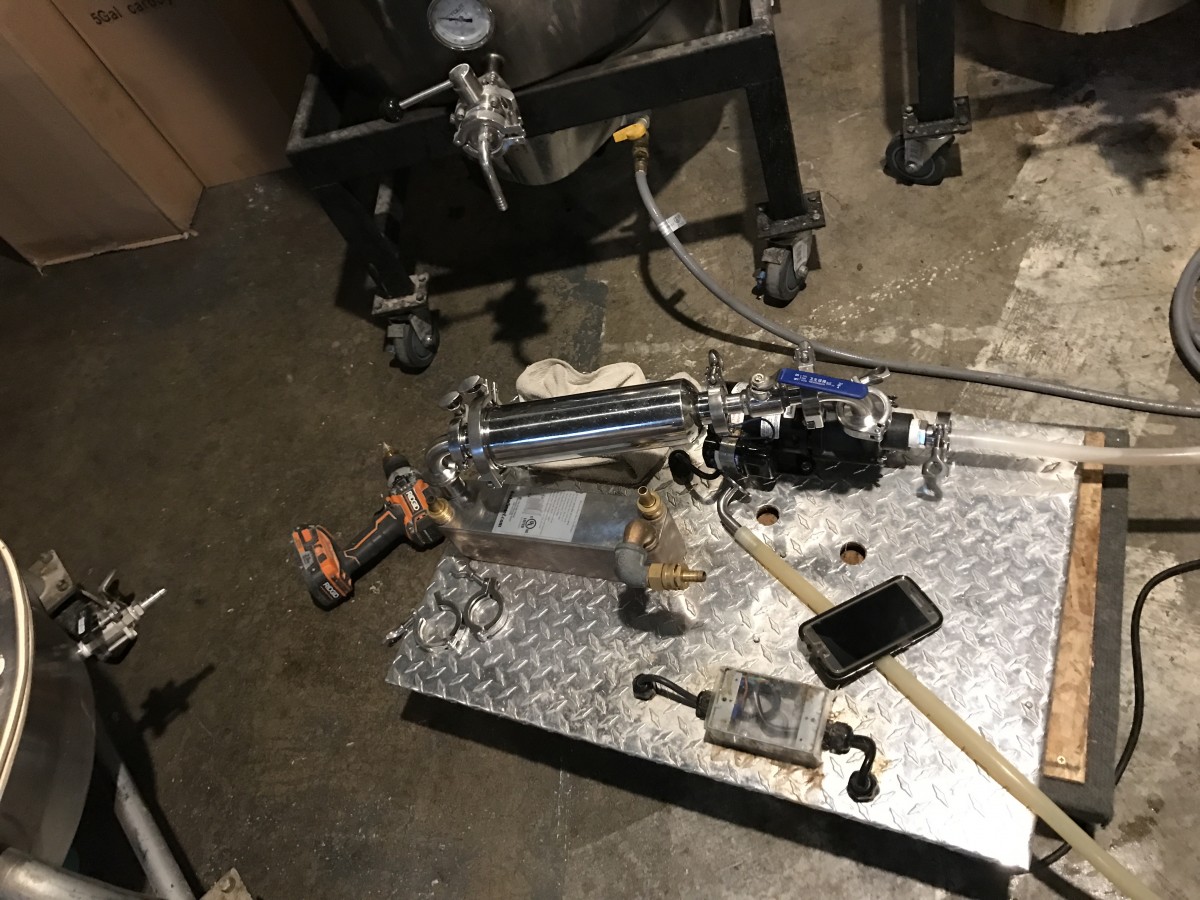
Plate chiller and pump system at Cascadia Homebrew
The higher the roasting or kilning temp, or the longer a grain is roasted or kilned, the less diastatic power the grain has. High temperatures will
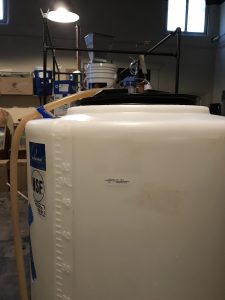
Sterilized 50 gallon carboy being filled with unfermented Irish Red Ale at Cascadia Homebrew
compromise diastase. The less a malt is roasted or kilned, the more diastatic power the malt will have. This is why base malts make up such a large percentage of the grain bill. The diastatic power is essential for converting the malt’s starches into fermentable sugars. These enzymes work most efficiently at a ph of about 5.2 and at a resting mash temperature between 148°F to 158°F. The darker the malt, (the longer it is kilned or roasted) the more acidic. This being said, when making a light beer more acidulated malt is required than if one were to be making a dark beer. Acidulated malt’s (malt infused with citric acid) only purpose is to adjust the ph of the mash without imparting any flavors. When making a very dark beer, the acidity of the dark malts will allow the brewer to use less acidulated malt in an effort to hit this target mash acidity. After the hour long mash is finished, most of the starches have been converted into fermentable sugars. During the sparge, 170°F water is used to compromise the diastatic power of the grains. If the sparge water is too hot, it will extract tannins from the barley husk into the wort (unfermented beer). Tannins will impart an unpleasant bitter flavor. If the sparge water is too cool, it will not efficiently compromise the diastatic power of the malt and it will be less efficient at extracting fermentable sugars from the grain bed. The grain bed should be very loosely suspended in the mash tun to allow for an even flow with maximum surface during the sparge. This is achieved with a fly sparge. A fly sparge is a method of collecting wort from the mash tun. While the wort is slowly drained from the grain bed, 170°F sparge water is added to the mash tun to keep the grain bed loosely suspended. The point of fly sparging is to add the sparge water evenly to the grain bed to avoid channeling of sparge water which can lead to an inefficient collection of fermentable sugars into the wort.

Irish Red Ale being oxygenated with Air stone prior to fermentation
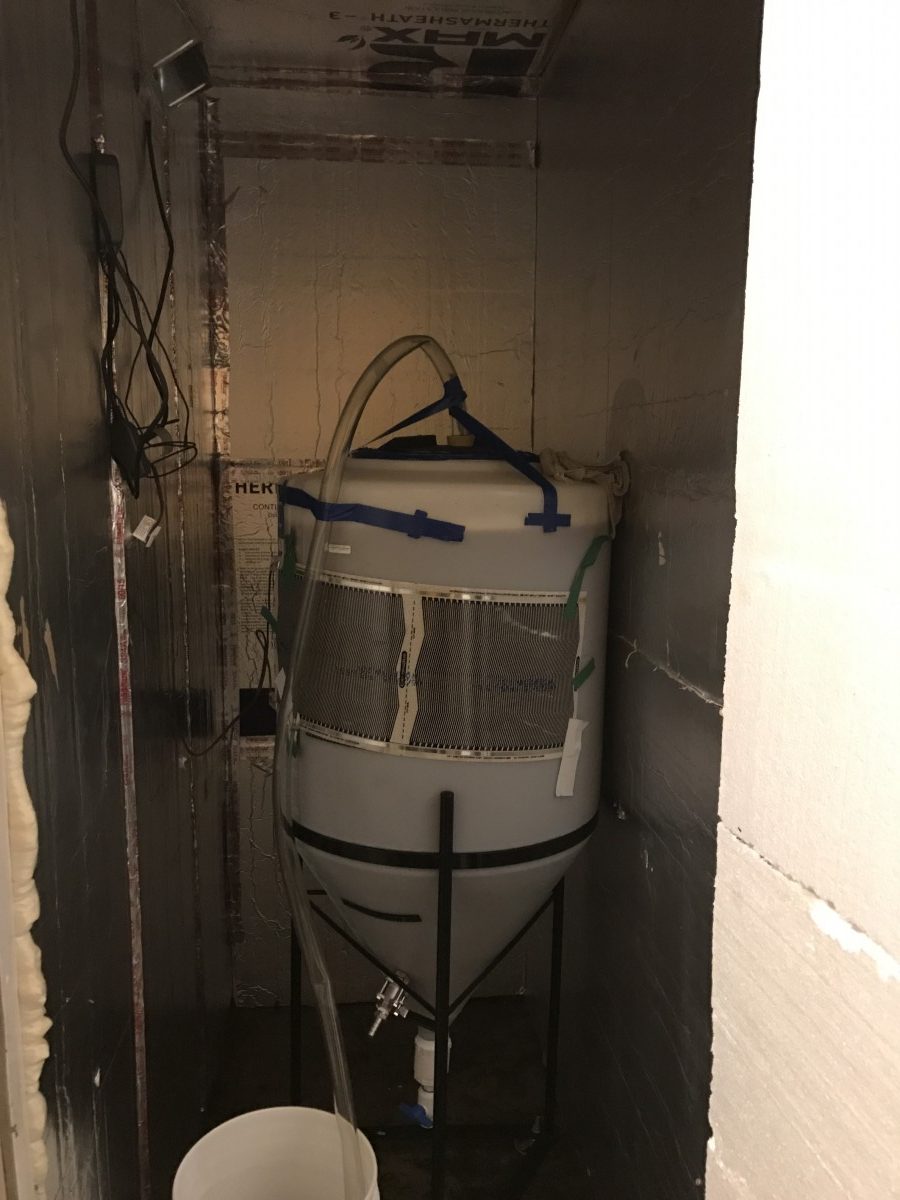
Controlled environment for fermentation at Cascadia Homebrew
Leave a Reply